INFORMATION
What does "minimally invasive" surgery mean?
The term "minimally invasive surgery" describes techniques that limit the extent of incisions or use natural openings in the body to access the surgical field. It mainly includes laparoscopic and robotically assisted operations and, in a different technical context, specialised endoscopic operations. The goal is effective treatment at the lowest appropriate burden — not the promise that every patient will be operated on without pain or complications.
In laparoscopy, the surgeon works through small incisions with a camera and thin instruments. In robotics, the surgeon controls special tools via a robotic platform — the robot does not operate autonomously. Endoscopic treatments, such as POEM, access certain anatomical areas through natural openings.
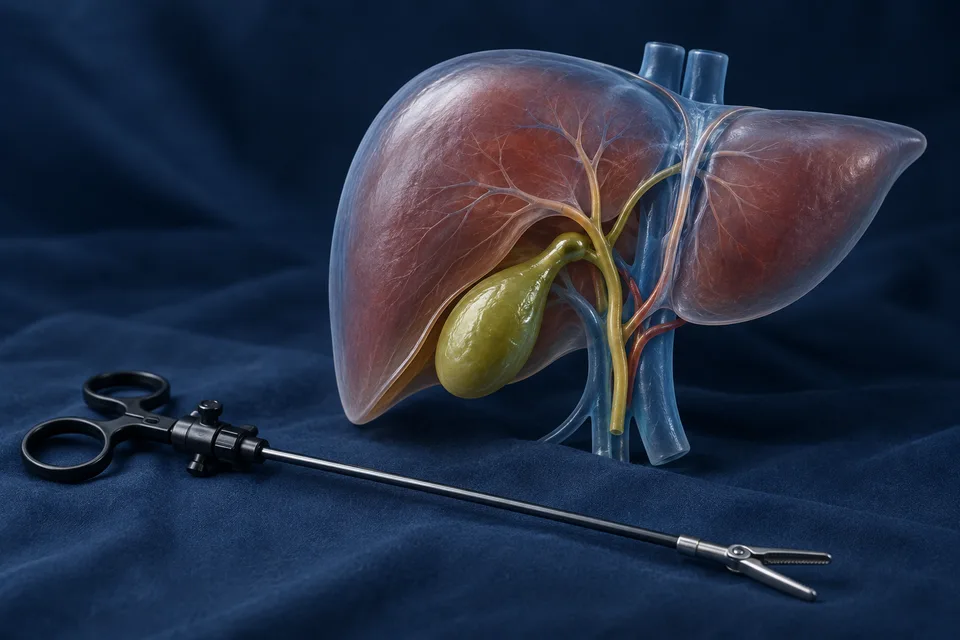
Laparoscopic surgery
It uses a camera to magnify the surgical field and tools from small incisions. It is used in procedures such as cholecystectomy, colectomy and selected hernia repairs.
Robotic surgery
The robotic platform can facilitate some technical manipulations, but it does not guarantee a better result for everyone. The choice needs documentation and appropriate experience.
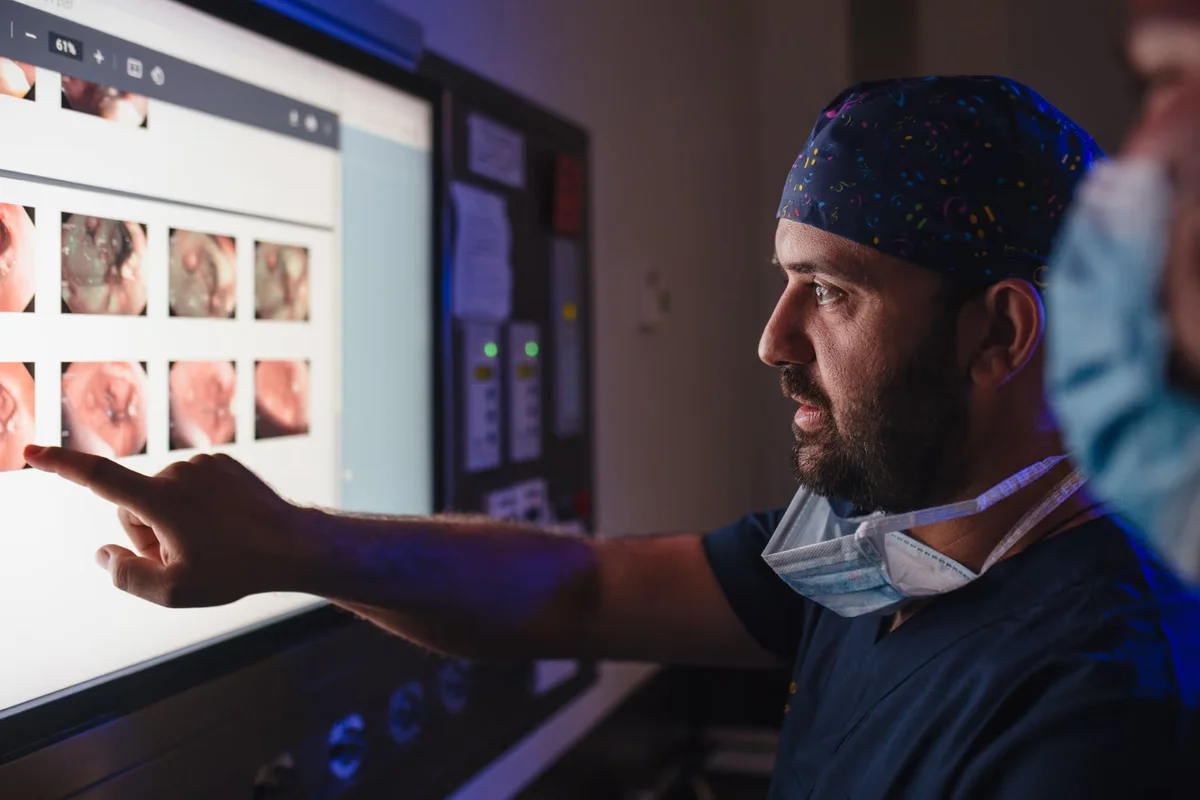
Endoscopic POEM myotomy
POEM is an endoscopic procedure through the mouth for selected oesophageal motility disorders. It is not the same as laparoscopy.
INFORMATION
In which diseases and operations can it be applied?
Minimally invasive access can be used in gallstones, certain hernias, colon diseases, reflux, thyroid and oesophageal diseases only where the method has an appropriate indication. It does not follow that all specific treatments are performed on the same infrastructure or with the same technique.
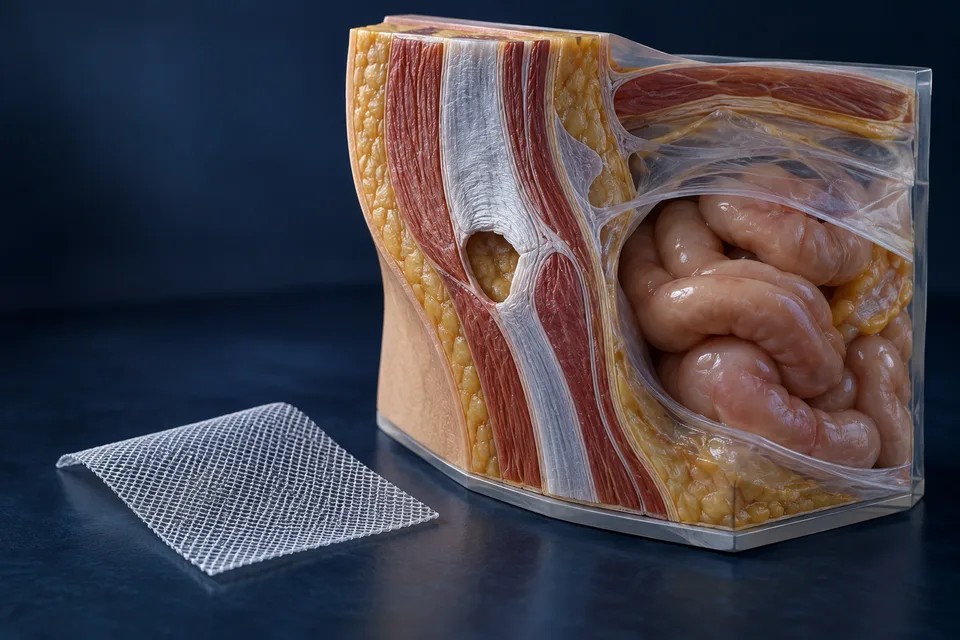
Hernia and TEP repair
Cholecystectomy and colectomy
Fundoplication and Heller myotomy
INFORMATION THAT MATTERS
What are the potential benefits?
In appropriately selected cases smaller incisions can be associated with milder postoperative pain, less wound burden, less hospital stay, and earlier mobilisation. The magnitude of the benefit depends on the specific condition and method, patient characteristics and comparison with other surgical solutions.
Personalised CARE
The right treatment
starts with you.
Your investigations, history and needs guide the next step. Discuss the available options with your doctor.
Talk to the doctorINFORMATION
Are there limitations and risks?
The small incision does not eliminate risks such as bleeding, infection, organ damage, anaesthetic complications or recurrence. In large inflammation, extensive adhesions, complex anatomy, or oncologic requirements, open access may be safer. Conversion to open surgery does not automatically equate to failure: it may be the correct surgical decision.
INFORMATION
How is laparoscopic or robotic technique chosen?
The choice is based on the indication, expected benefit, potential for complications, anatomy, previous operations, and team experience. It is not enough to promise a technology. In the discussion there must also be the possibility of an open or conservative approach, when it has a place.
INFORMATION
Recovery and monitoring
After minimally invasive techniques mobilisation can be early, but the return to work, feeding and physical exercise is not the same for every operation. Recovery after colectomy is not directly comparable to cholecystectomy or hernia repair. The surgeon provides a specific plan for the type of treatment.
INFORMATION
Contact and individual advice
The information is general and is not a substitute for medical advice. For personalised advice and discussion of treatment options: Contact the doctor