INFORMATION
How does fundoplication work?
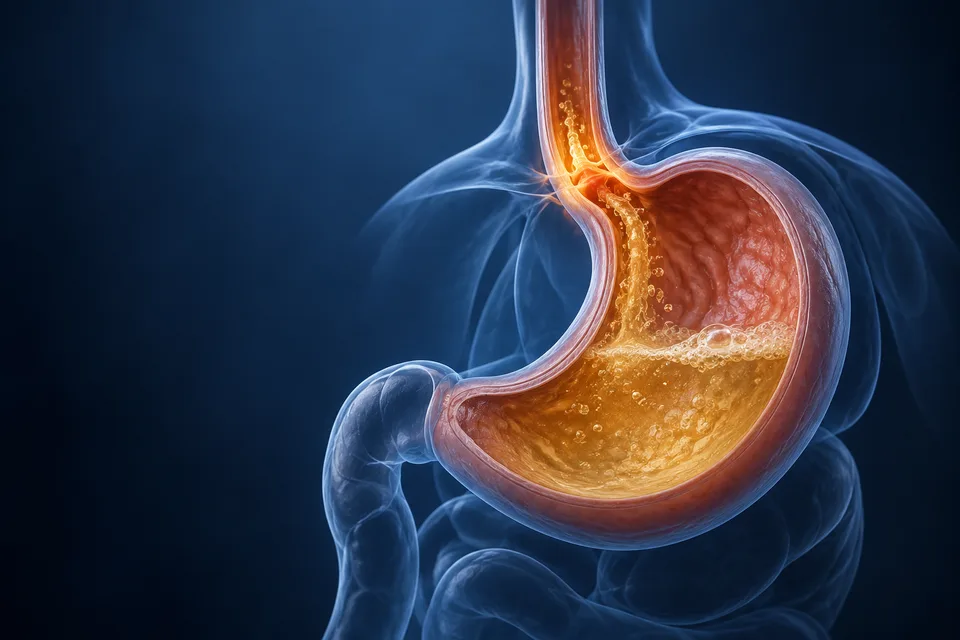
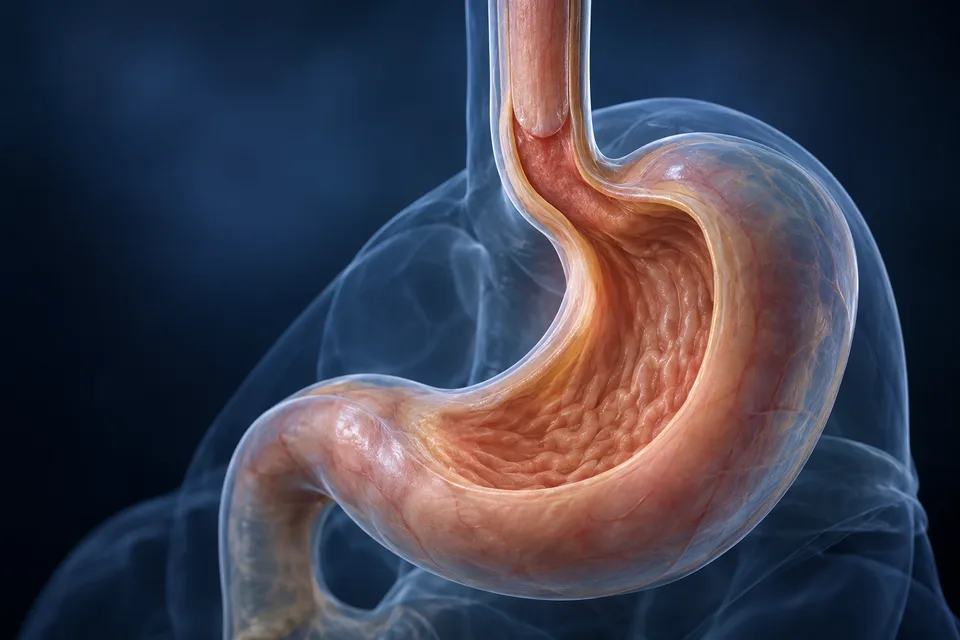
Fundoplication is a surgical procedure for documented gastro-oesophageal reflux disease (GORD) in appropriately selected patients. The purpose is to strengthen the mechanism that limits the return of gastric contents to the oesophagus, taking into account the function of swallowing and any coexisting hiatus hernia.
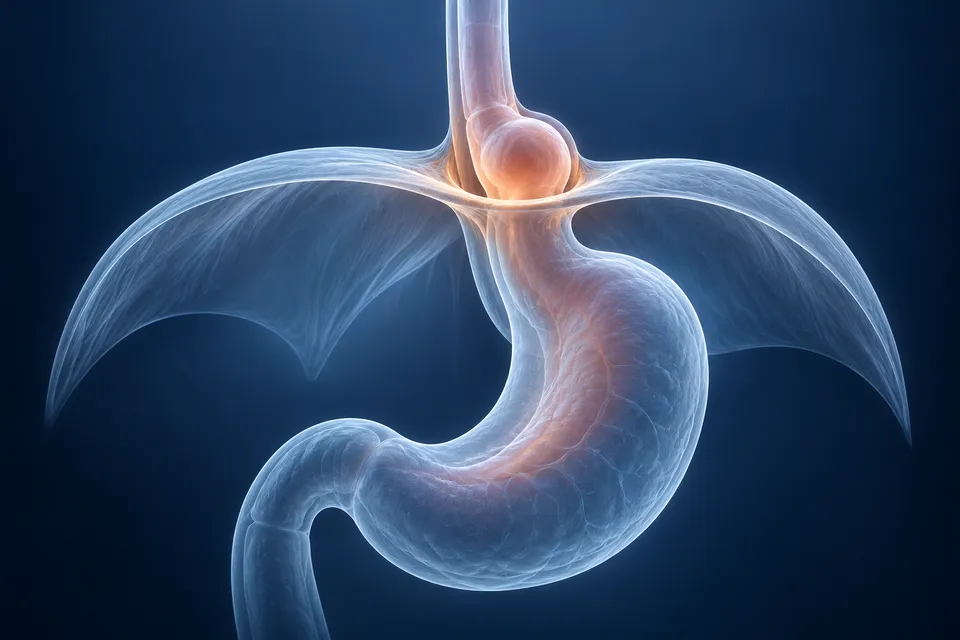
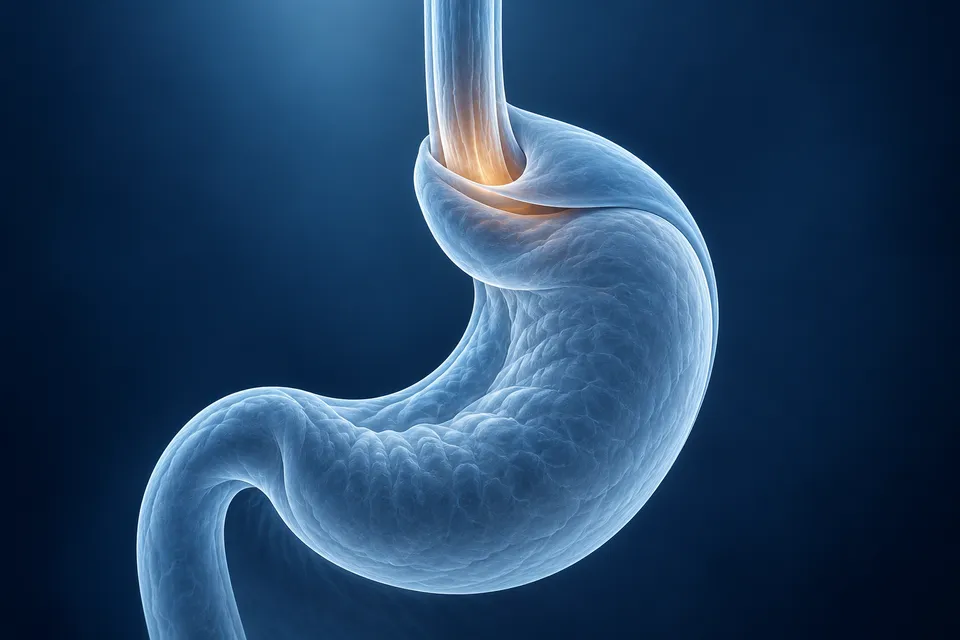
The fundus of the stomach wraps around the lower part of the oesophagus, strengthening the anti-reflux barrier. The technique does not cure all forms of heartburn: it is preceded by a diagnosis that confirms true reflux and excludes other causes of symptoms.
Complete Nissen fundoplication (360°)
The fundus of the stomach completely surrounds the oesophagus. It can effectively control reflux in appropriate patients, but is associated with the possibility of dysphagia or difficulty eructation.
Partial Toupet or Dor fundoplication
A partial wrap is an alternative in certain clinical circumstances. The manometry finding, history, patient preferences, and surgical judgement all shape the choice.
INFORMATION
When is reflux surgery considered?
Fundoplication may be discussed when there is objective documentation of GORD and symptoms persist despite appropriate management, when treatment is not tolerated, or when specific anatomic/clinical indications are present. It is not an automatic cure for any heartburn or Barrett's oesophagus without evaluation.
Hiatus hernia and fundoplication
In some cases, the hiatus hernia is also repaired at the same time. The type of repair is based on anatomy and the type of hernia, not a one-size-fits-all recipe.
INFORMATION
Which investigations are needed first?
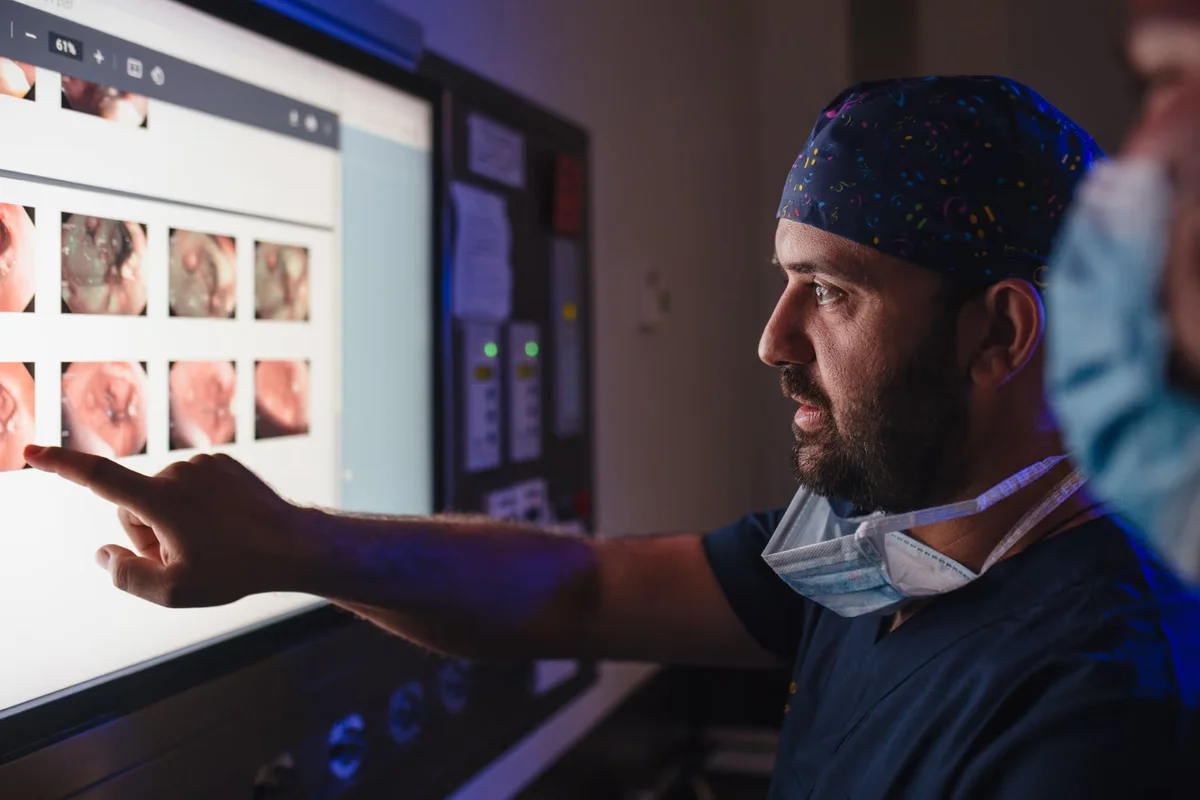
Gastroscopy, response to medications, and, where indicated, 24-hour pH-metry or pH-impedance are usually evaluated to document acid exposure. High-resolution manometry helps rule out serious motility disorders, such as achalasia, and plan surgery.
Preoperative evaluation has more value than the mere presence of symptoms. The surgeon discusses what can realistically be improved and what cannot.

Personalised CARE
The right treatment
starts with you.
Your investigations, history and needs guide the next step. Discuss the available options with your doctor.
Talk to the doctorINFORMATION
How is the operation performed?
Laparoscopic access is usually performed under general anaesthesia or, in selected cases, robotically assisted. The surgeon mobilizes the area, repairs the hiatus hernia if necessary and creates the selected wrap. The technique is adapted to the anatomical findings.
Open access remains an option when the minimally invasive method is not the safest.
INFORMATION
Diet and recovery after fundoplication
In the first days to weeks, the diet is usually gradually transitioned from liquids to soft foods, following exactly the team's instructions. Temporary difficulty swallowing, bloating and difficulty belching are known occurrences. Mobilisation is gradual, with restrictions dependent on the operation.
Discontinuation or modification of antisecretory drugs is not done automatically on the day of surgery but with guidance.

INFORMATION THAT MATTERS
Benefits, limitations and risks
Surgery can improve reflux in appropriately selected patients, but does not guarantee permanent cessation of all medications. Possible risks are dysphagia, gas-bloat, inability to belch or vomit, recurrence of GORD, bleeding or organ damage.
Persistent inability to swallow liquids, severe pain, fever, or shortness of breath after surgery requires immediate evaluation.
INFORMATION
Communication and medical assessment
This information does not replace a clinical examination. The suitability of an operation, technique and recovery time are assessed individually. To arrange an assessment: Contact the doctor