INFORMATION
About the condition
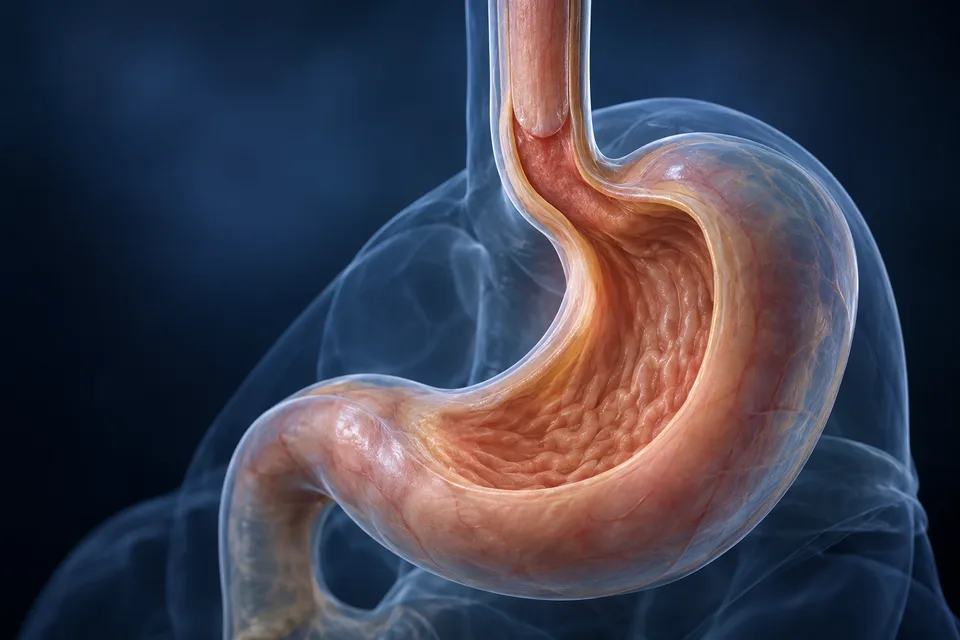
Hiatus hernia is one of the most common gastroscopy findings: the stomach, which is normally located in the abdomen, passes through the diaphragm towards the chest. Very often it coexists with gastro-oesophageal reflux — the well-known heartburn and acid regurgitation — and rarely manifests itself with more "strange" signs: bloating, shortness of breath, even palpitations after eating. The important thing: NOT all patients with a hiatus hernia are candidates for surgery. A full functional assessment shows who will really benefit.
INFORMATION
What is a hiatus hernia and how is it related to reflux?
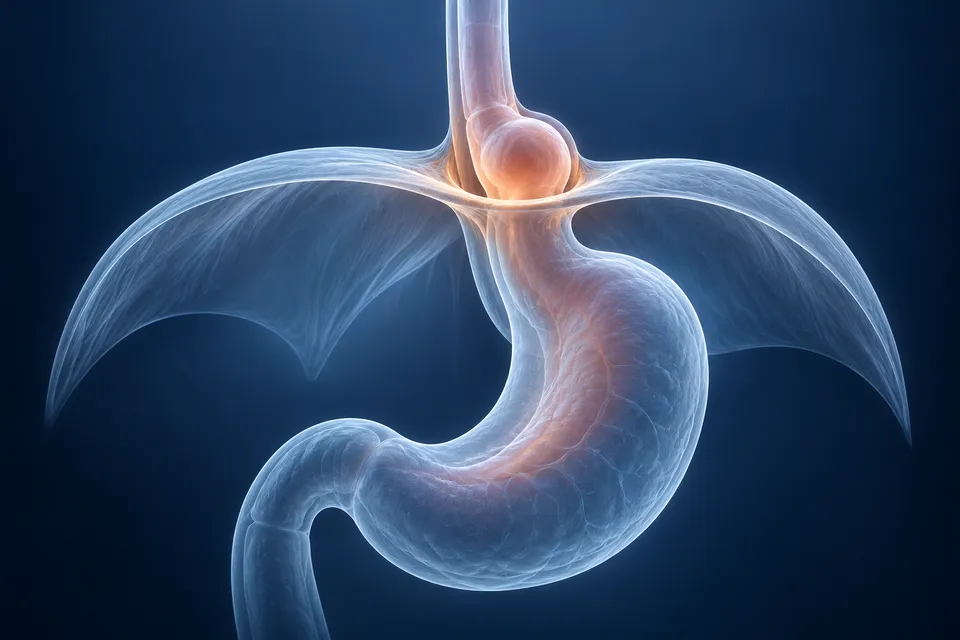
The diaphragm is the muscle that separates the chest from the abdomen; the oesophagus passes to the stomach through a natural opening in it. A hiatus hernia is when the stomach — which under normal circumstances is in the abdomen — pushes through the diaphragm into the chest.
This shift disrupts the "valve" that prevents the backflow of gastric juices — which is why very often patients suffering from GORD also suffer from a hiatus hernia. Reflux becomes a disease when it causes damage to the oesophagus (oesophagitis) or when symptoms occur more than 2 times a week.
INFORMATION
The types: sliding & para-oesophageal
Sliding hiatus hernia (type I) — The oesophagus–stomach junction “slides” up and down through the opening. By far the most common form, the one mainly associated with reflux.
Para-oesophageal hiatus hernia (types II–IV) — Part of the stomach rises next to the oesophagus and remains permanently in the chest. Rarer but more “mechanical”: can cause pressure, anaemia, difficulty feeding — and carries risk of gastric volvulus or strangulation. That is why large para-oesophageal hernias are more often indicated for surgery.

Personalised CARE
The right treatment
starts with you.
Your investigations, history and needs guide the next step. Discuss the available options with your doctor.
Talk to the doctor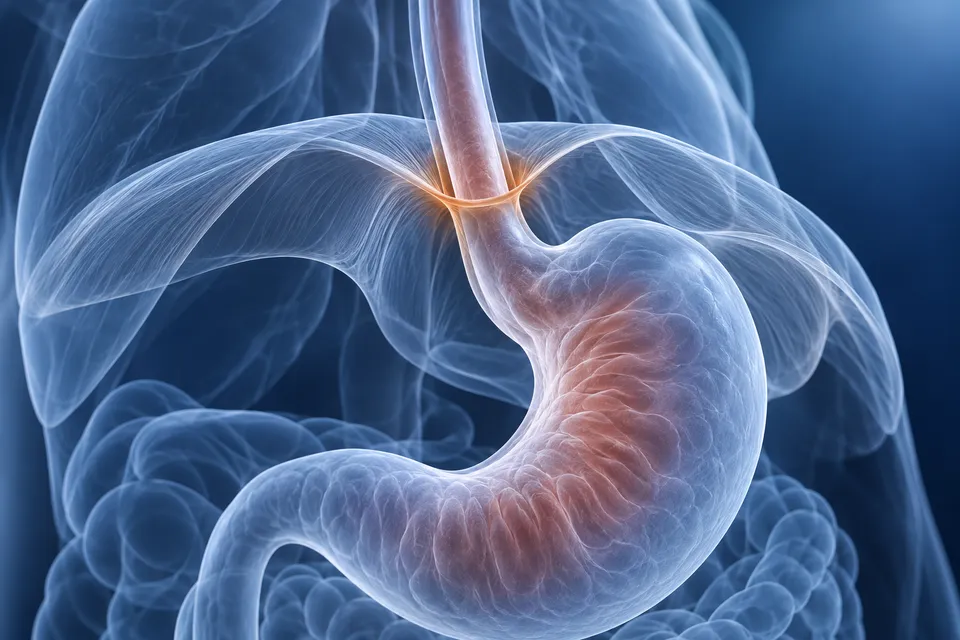
ATTENTION TO THE SYMPTOMS
Symptoms — when to seek help
The most common symptoms:
Burning in the chest, heartburn or acid regurgitation
Stomach or abdominal pain
Phlegm or hoarse voice, cough
Difficulty swallowing
Less typical symptoms — which can be confusing:
Bloating, belching, feeling full with small meals
Palpitations or "fluttering" after eating — the distended hernia may irritate neighbouring structures; however, arrhythmias always require cardiac assessment, they are not automatically attributed to the hernia
Shortness of breath or easy fatigue after meals, in large hernias
Anaemia of no apparent cause — characteristic of large para-oesophageal hernias
When to seek help: If you have heartburn or acid regurgitation at least 2 times a week, it is important to see an experienced team to investigate whether the symptoms are due to simple reflux or a hiatus hernia. Many small hiatus hernias, however, cause no symptoms and are an incidental finding — this in itself is not a cause for concern or surgery.
INFORMATION
Hiatus hernia and cancer: what is true
A hiatus hernia is not cancer and does not "become" cancer — it is an anatomical displacement, not a tumour.
The important side note: hiatus hernias favor chronic reflux — and long-term, untreated reflux can in some patients cause Barrett's oesophagus, a lesion that in a small percentage predisposes to oesophageal cancer. That is, the path is not "hernia → cancer", but "hernia → chronic dysregulated reflux → Barrett → rare, transformation".
In practice, a symptomatic hiatus hernia needs appropriate management rather than simply tolerating the symptoms. Further information: Read more — section Barrett] · [→ Read more])
INFORMATION
What is the examination process?
01 — History taking Our therapeutic approach begins by taking a detailed, if applicable, medical history. There we listen to the problems of each patient, the symptoms they show and how they affect their daily life.
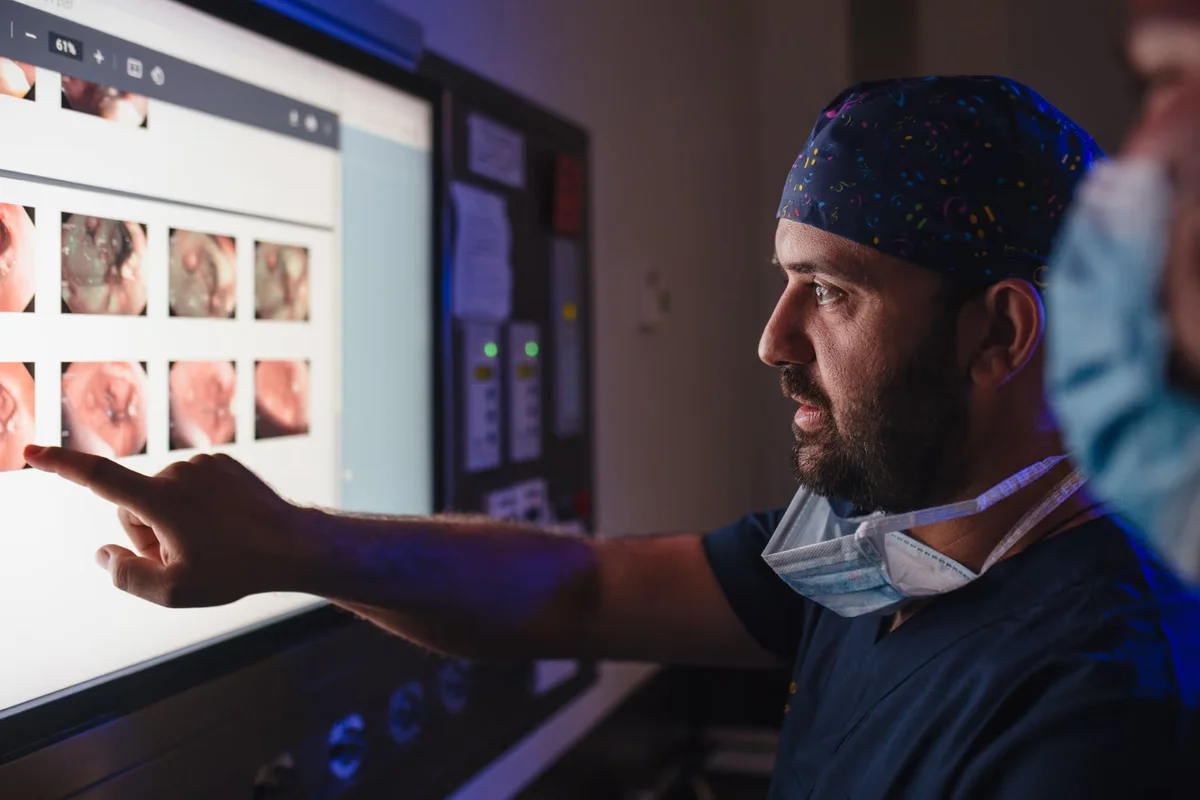
02 — Control & tests Depending on the symptoms, the tests necessary for the complete picture are suggested: gastroscopy, manometry, pH-metry, chest CT scan, etc.
03 — Evaluation of results Our team — gastroenterologists, pulmonologists, cardiologists, nutritionists and surgeons — analyses the patient's problem and suggests the most appropriate solution.
04 — Treatment In mild reflux, conservative treatment with drugs is probably followed. In severe regurgitation or a large hiatus hernia, the team decides whether to resolve the problem conservatively or surgically. NOT all patients with reflux or hiatus hernia are candidates for surgery — all indications must be met to do so.
INFORMATION
Surgical treatment of reflux / hiatus hernia
Since conservative treatment does not bring results, as well as in more advanced stages of the disease, surgical treatment is preferred. In these cases we are asked to solve 2 basic problems:
To fix the hiatus hernia problem
Treat the reflux
In the first part of the surgery, we place the stomach in the abdomen — that is, in its normal position — and the enlarged opening of the diaphragm is closed to its normal dimensions.
In the second part we prevent gastric fluids from returning to the oesophagus, where they create heartburn and acid regurgitation. Depending on the manometry findings, full (Nissen) or partial fundoplication is chosen — to avoid postoperative difficulty in swallowing.
Both steps are performed in one operation, including fundoplication. Our team uses minimally invasive laparoscopic or robotic techniques, aiming to reduce complications and support recovery. More about fundoplication: Read more — section Nissen])

INFORMATION THAT MATTERS
What are the advantages of robotic surgery?
Robotic Fundoplication includes all the advantages of Laparoscopic Fundoplication and maximizes them. The 3D image and the flexibility it gives to the surgeon's movements, combined with the team's many years of experience in laparoscopic and robotic surgery, offer:
Minimal postoperative pain, thanks to the absence of large incisions
Return home usually the next day, with minimal use of painkillers
Immediate recovery and very short return to daily activities
Excellent aesthetic result, as large incisions are avoided
Reduced risk of complications: the precision of robotic tools helps protect surrounding tissues and organs during surgery
The robotic approach is the most modern treatment option for patients with reflux and hiatus hernia who have an indication for surgery, and offers particular advantages to patients with obesity or comorbidities.
INFORMATION
Nutrition and hiatus hernia
Diet doesn't "close" a hernia — but it does help control symptoms:
Small, frequent meals instead of few and large; slow chewing.
Avoiding meals 2–3 hours before going to bed and raising the headrest.
Limiting the “known suspects” where they aggravate: fatty/fried foods, alcohol, caffeine, carbonated, chocolate, spicy — tolerance varies from person to person.
Yogurt and dairy: for many patients low-fat is well tolerated and provides relief; for others, full-fat makes symptoms worse. There is no universal rule — observe your own response.
Body weight regulation — among the most effective interventions overall.
The instructions are personalised, in collaboration with the team's nutritionists.
INFORMATION
Why choose us?
Experience — Our team has participated in thousands of successful surgeries, giving our patients the opportunity to return to their daily lives. Drawing on this experience, the team treats even the most demanding cases with consistency and respect, both for the patient and his family.
High Expertise — Our team manages over 100 reflux and hiatus hernia patients annually. The operations are performed with minimally invasive techniques — laparoscopy or robotic surgery with the Da Vinci system — with all the benefits they have for the patient.
Comprehensive care — We follow all diagnostic and treatment protocols. The team consists of experienced doctors of all specialties, enabling the patient to do all the necessary tests immediately and in one place. We never operate on a patient unless we are sure they meet all the criteria and indications.
Safe & Modern Environment — The team operates at the "AGIOS LOUKAS" Clinic in Panorama Thessaloniki: state-of-the-art environment, safety and friendly post-operative environment for the patient, with the most modern equipment.
INFORMATION
Our experience in numbers
100+ patients a year with reflux & hiatus hernia — our team has extensive experience in treating the problem.
4,000+ surgeries — General Surgeon Theodoros Kaltsikis, with his team, has participated in thousands of successful surgeries in recent years.
INFORMATION
Doctor quote
"My goal is for our team to offer the patient with reflux or hiatus hernia the best possible treatment they can have, based on their needs and their choices. We are by our patients' every need..."
— Theodoros Kaltsikis, General Surgeon
INFORMATION
Cases
Case: Dimitris’s story
Case: Victoria’s story
INFORMATION
Patient Impressions
"I want to thank from the bottom of my heart the excellent scientist doctor and wonderful person for the correct treatment of my problem with complete success..." — Vasso A.
"A doctor who inspired me with confidence. A very experienced, highly qualified professional and above all a person!!!" — Anastasia P.
"A wonderful scientist and man..." — A.