INFORMATION
About the condition
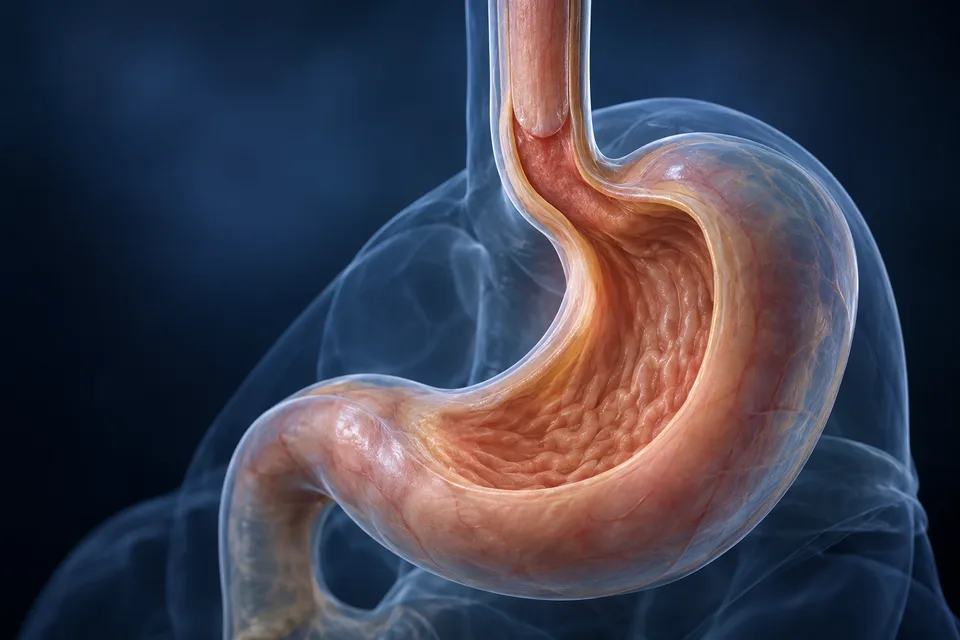
When heartburn and regurgitation become part of everyday life, an accurate diagnosis is needed, not simply another tablet. Gastro-oesophageal reflux disease (GORD) significantly affects quality of life and, if neglected, can lead to changes in the oesophagus, such as Barrett’s oesophagus, or chronic respiratory symptoms and infections. Full functional assessment with manometry and pH monitoring identifies the precise mechanical problem, allowing appropriate treatment to be selected: conservative or, where clearly indicated, surgical.
INFORMATION
What is gastro-oesophageal reflux?
The role of the oesophagus
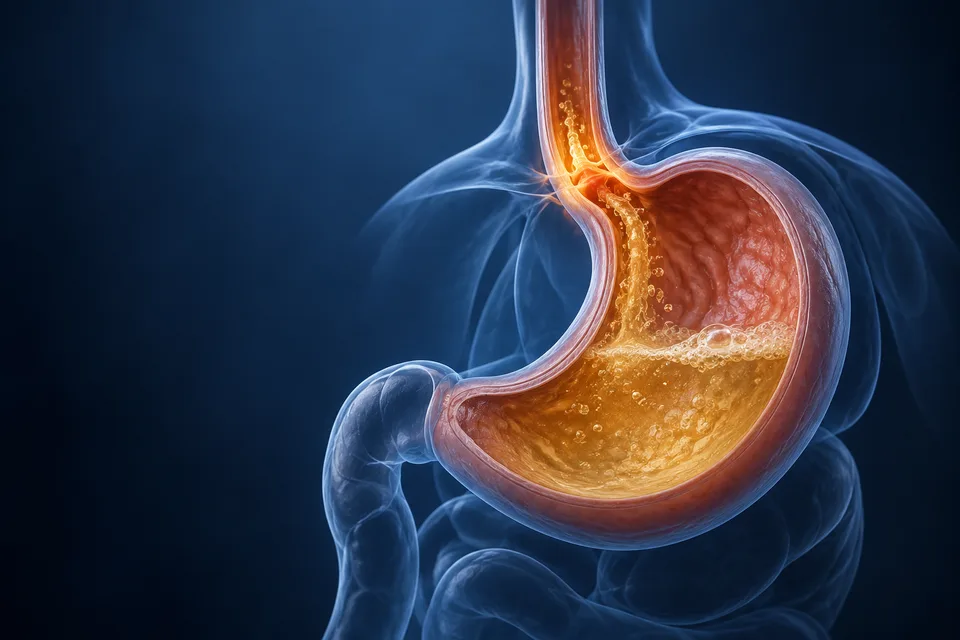
The oesophagus carries food from the mouth to the stomach. At its lower end, a valve mechanism prevents stomach contents from flowing back.
GORD
Gastro-oesophageal reflux is the backward flow of stomach contents into the oesophagus when the valve mechanism is inadequate. It causes persistent heartburn, regurgitation and an acidic taste, and often atypical symptoms such as hoarseness, chronic cough and sleep disturbance.
The link with hiatus hernia
A hiatus hernia — weakening of the diaphragmatic tissues that allows part of the stomach to move up into the chest — often coexists with GORD and makes it worse.
Persistent symptoms — heartburn and regurgitation are not a normal part of daily life.
Objective diagnosis — gastroscopy, manometry and pH monitoring identify the precise mechanical problem.
Surgery only when indicated — otherwise, conservative treatment.
ATTENTION TO THE SYMPTOMS
When should it be investigated? Signs you should not ignore
Many patients become used to their symptoms or mask them with medication for years without a full investigation of the cause.
Points that need medical evaluation:
Persistent or daily heartburn
Regurgitation of food or fluids, particularly during sleep
Chest pain or burning
Symptoms persisting despite medication
Chronic cough, hoarseness or respiratory symptoms without another explanation

Personalised CARE
The right treatment
starts with you.
Your investigations, history and needs guide the next step. Discuss the available options with your doctor.
Talk to the doctorINFORMATION
Who is affected? When is surgical assessment needed?
GORD often affects people with:
Increased body weight
Dietary habits that aggravate symptoms
High stress levels
Older age, because of weakening of the diaphragmatic tissues
When is surgical treatment necessary?
A large proportion of the population has a hiatus hernia, but only a minority have a clear indication for surgery, and only after the necessary investigations, including manometry and pH monitoring. Surgery is considered mainly when:
Symptoms are not adequately controlled with medication
The patient does not wish to take lifelong medication
Changes have developed in the oesophagus, such as Barrett’s oesophagus
There is a large hiatus hernia with a documented mechanical problem
We operate only when indicated; otherwise, surgery risks making matters worse rather than helping.
INFORMATION
Reflux and Barrett’s oesophagus: when monitoring is needed
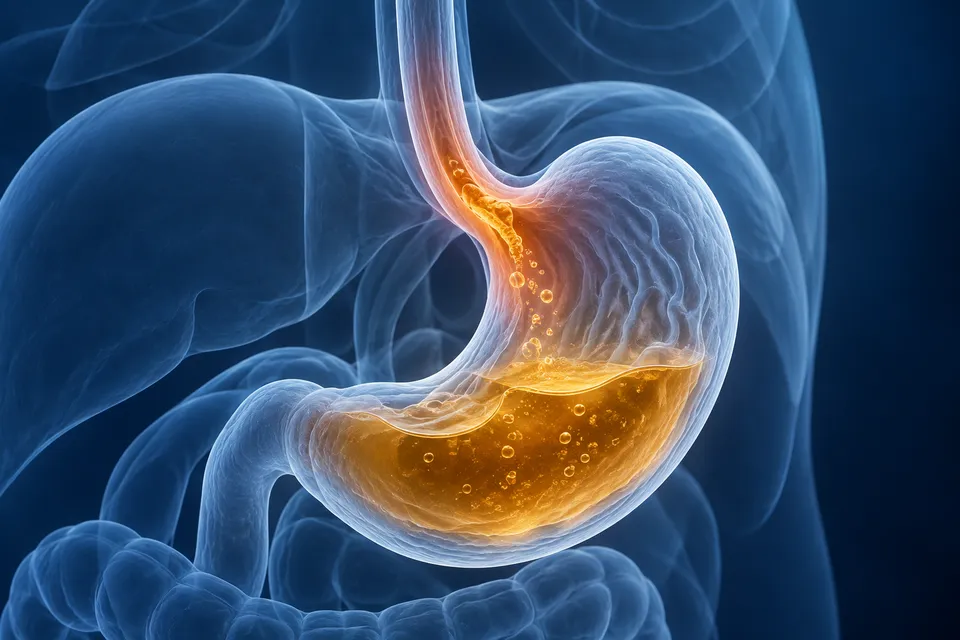
Long-standing, untreated reflux can cause Barrett’s oesophagus: a change in the cells lining the lower oesophagus. Barrett’s is not cancer, but in a small proportion of patients, adenocarcinoma may develop in this altered lining over the years.
What this means in practice:
Chronic heartburn should not be dismissed — it needs diagnosis and appropriate treatment.
Where gastroscopy identifies Barrett’s oesophagus, regular endoscopic surveillance is arranged so that any changes can be detected at the earliest stage.
Effective treatment of reflux, conservative or surgical, is part of the strategy to protect the oesophagus.
Benefits of appropriate treatment
Identifying the precise mechanical problem rather than masking symptoms with medication for years
In suitable cases, surgical repair can reduce or eliminate the need for daily medication
Preventing progression of oesophageal changes and chronic respiratory symptoms
Avoiding unnecessary operations through full functional assessment before any decision
THE PROCEDURE
How is the evaluation done? Step by step
Medical history — Symptoms, frequency, effects on sleep and everyday life, and medication.
Gastroscopy — The main diagnostic tool: it examines the oesophageal lining, any oesophagitis, Barrett’s changes and hiatus hernia.
Barium swallow — Shows the anatomy of the oesophagus and stomach and the passage of food.
Manometry where needed — Measures oesophageal movement and valve function. It is essential before deciding on anti-reflux surgery and to exclude motility disorders such as achalasia (→ /en/conditions/oesophageal-achalasia).
pH monitoring where needed — Objectively records reflux over 24 hours.
Treatment planning — Conservative or surgical treatment based on objective findings.
TREATMENT OPTIONS
Treatment options
Conservative treatment
Dietary and lifestyle changes, including weight loss where needed, avoiding trigger foods and adjusting meals, together with medication. For many patients with GORD, this is sufficient.
Surgical treatment — laparoscopic or robotic
When medication does not control symptoms, the patient does not wish to take lifelong treatment, or there are oesophageal changes or a large hiatus hernia, anti-reflux surgery (fundoplication) restores the valve mechanism. This is explained in the next section. Operations are minimally invasive and performed according to international protocols at St Luke’s Hospital.
Hiatus hernia
Repair is laparoscopic or robotic, together with fundoplication when required. Particular attention is paid to avoiding postoperative swallowing difficulties, which can occur if the reconstruction is too tight. Our team reports low rates of swallowing difficulty and high rates of successful outcomes.
INFORMATION
The operation: Nissen fundoplication
Fundoplication is the established anti-reflux operation: the upper part of the stomach, the fundus, is wrapped around the lower oesophagus to create a functioning valve that prevents stomach contents from flowing back. When a hiatus hernia coexists, as is usually the case, it is repaired during the same operation.
How is it performed?
It is performed laparoscopically or robotically through openings a few millimetres wide. Depending on manometry findings, a full wrap (Nissen, 360°) or partial wrap, such as Toupet, is chosen. A partial wrap is preferred when oesophageal movement is weak, to avoid postoperative swallowing difficulties. This is why manometry precedes the decision: it determines both whether and how to operate.
What it can offer
In appropriately selected cases, fundoplication can reduce or eliminate the need for daily medication and substantially improve quality of life. The result depends on the findings and individual case.
After the operation
A short hospital stay, followed by gradual progression from liquids to soft foods during the first weeks, with clear written instructions.
INFORMATION
Other oesophageal conditions
Achalasia — difficulty swallowing, including liquids, regurgitation of undigested food and reflux-like symptoms that do not respond to medication. Robotic treatment is now also available. → Read more
Oesophageal cancer — progressive difficulty swallowing and weight loss; persistent swallowing difficulty always warrants gastroscopy. → Read more
Oesophageal stricture — narrowing of the oesophagus, often a complication of chronic reflux. It is generally treated endoscopically in collaboration with a gastroenterologist.
Oesophageal varices — enlarged veins associated with liver disease. Their management falls within gastroenterology/hepatology and they are mentioned here for completeness.
INFORMATION
What to expect at your first appointment
Step 1 — Understanding your everyday experience: We discuss how the condition affects your life, how often you have heartburn, whether sleep is disturbed and which medicines you take.
Step 2 — Reviewing investigations: Together, we examine gastroscopy, manometry or pH monitoring findings to identify the precise mechanical problem.
Step 3 — Discussing treatment options: We explain whether conservative treatment is appropriate or surgery is indicated, including the benefits and possible risks of each option.
Useful to have with you
Recent gastroscopy report and biopsy results, if available
Manometry / pH monitoring results, if performed
Oesophageal and stomach imaging, if available
A list of medicines, particularly antacids/PPIs, and supplements
List of allergies
Reports from other doctors, such as your gastroenterologist
History of hospital admissions or operations
THE PROCEDURE
Diagnosis and preparation
The diagnostic assessment answers four key questions:
Is there confirmed reflux or another oesophageal condition?
What is the mechanical or functional problem: the valve, hiatus hernia or motility?
Have changes developed, such as oesophagitis or Barrett’s oesophagus?
Is surgery indicated, or is conservative treatment sufficient?
Preparing for assessment: Gather investigations in chronological order and note for several days when symptoms occur and what precedes them.
If an operation is planned, the pre-operative check-up includes blood tests, cardiac/pre-anaesthetic check-up and information about any drug discontinuation (eg anticoagulants) as directed.