INFORMATION
About the condition
Oesophageal cancer often develops silently. Its most characteristic symptom, progressively worsening difficulty swallowing, appears once the disease has already developed. Persistent difficulty swallowing, unexplained weight loss or long-standing untreated reflux therefore always require investigation. Treatment today is individualised and multidisciplinary, planned separately for each patient at a multidisciplinary cancer meeting.
INFORMATION
What is oesophageal cancer?
Oesophageal cancer develops when cells in the lining of the oesophagus begin to multiply uncontrollably. The two main types are:
Adenocarcinoma — usually in the lower oesophagus, associated with chronic gastro-oesophageal reflux and Barrett’s oesophagus.
Squamous cell carcinoma — more often in the middle or upper oesophagus, associated mainly with smoking and alcohol.
Because the oesophagus is an elastic tube, symptoms can take time to appear. When they do, prompt investigation is needed.
ATTENTION TO THE SYMPTOMS
Symptoms — when investigations are needed
In its early stages, oesophageal cancer often causes no symptoms. Signs requiring investigation include:
Difficulty swallowing (dysphagia), typically progressive: first with solid food, later with soft food or liquids.
A feeling that food is sticking behind the breastbone.
Unexplained weight loss.
Pain or discomfort when swallowing or behind the breastbone.
Persistent hoarseness or cough.
Anaemia or, less commonly, visible bleeding.
Most of these symptoms are more often due to benign causes, such as reflux-related narrowing or achalasia. However, because these cannot be distinguished without investigation, persistent difficulty swallowing always requires gastroscopy without delay.
Personalised CARE
The right treatment
starts with you.
Your investigations, history and needs guide the next step. Discuss the available options with your doctor.
Talk to the doctorINFORMATION
Risk factors — Barrett’s oesophagus
Chronic gastro-oesophageal reflux — prolonged exposure to acidic contents can cause changes in the oesophagus.
Barrett’s oesophagus — a change in the lining of the lower oesophagus that can give rise to adenocarcinoma. Patients with Barrett’s require scheduled endoscopic surveillance.
Smoking and alcohol — the main risk factors for squamous cell carcinoma.
Obesity — increases reflux and its associated risk.
Age and sex — more common in older men.
Long-standing achalasia — a less common factor, and another reason for timely treatment.
The practical message: persistent, untreated heartburn should not be dismissed — it needs diagnosis, appropriate treatment and, where Barrett’s oesophagus is identified, regular monitoring.
THE PROCEDURE
How is the diagnosis made? Step by step
Medical history and clinical examination — Symptoms, duration, smoking/alcohol use and a history of reflux or Barrett’s oesophagus.
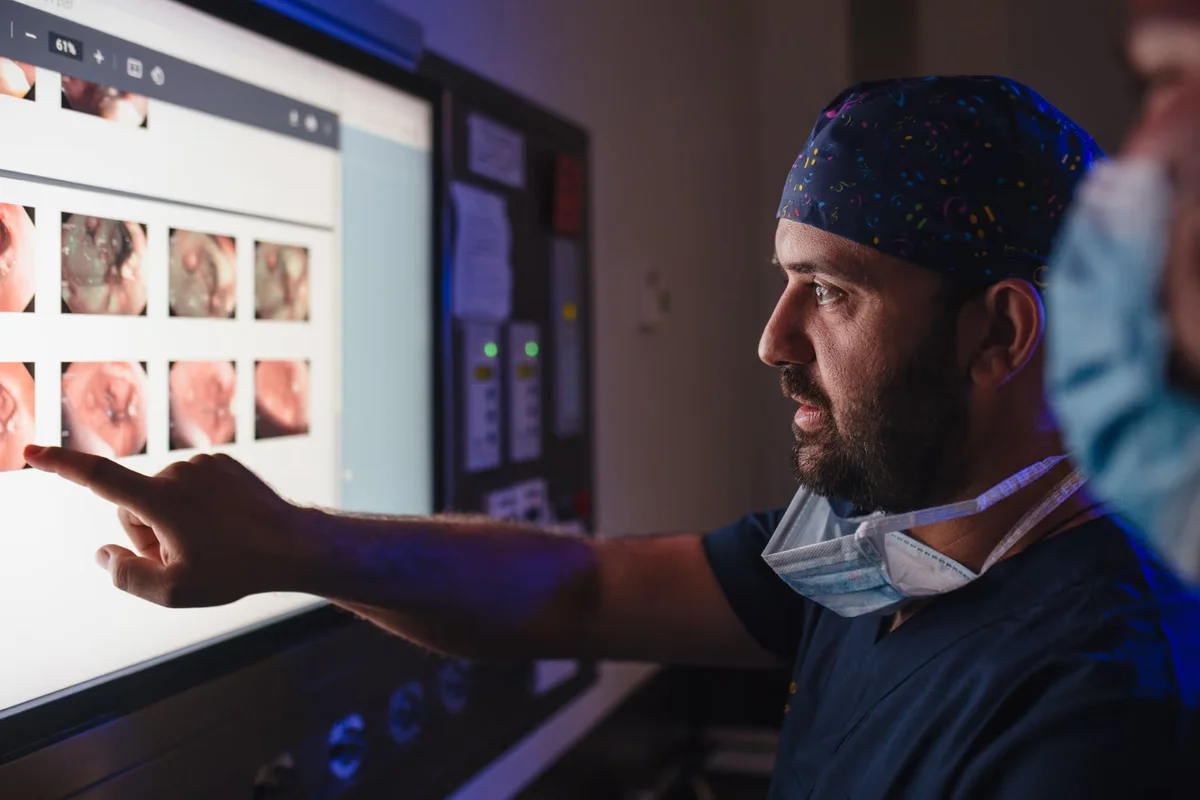
Gastroscopy with biopsies — The key investigation: it identifies the lesion and confirms the diagnosis through examination of tissue samples.
Staging — CT of the chest and abdomen and, where appropriate, endoscopic ultrasound or PET-CT to assess local extent and any spread.
Laboratory tests — General and biochemical blood tests, nutritional assessment and tumour markers where appropriate. There is no blood test that can diagnose oesophageal cancer on its own — see the FAQs.
Multidisciplinary cancer meeting — The treatment plan is developed by a multidisciplinary team and tailored to the stage, type of cancer and the patient’s general health.
INFORMATION
Treatment
Treatment for oesophageal cancer is now multimodal — it rarely involves just one approach:
Endoscopic treatment — for very early stages
For superficial lesions confined to the lining, for example in Barrett’s oesophagus under surveillance, endoscopic resection or treatment may be sufficient, in collaboration with a specialist gastroenterologist.
Surgical treatment — oesophagectomy
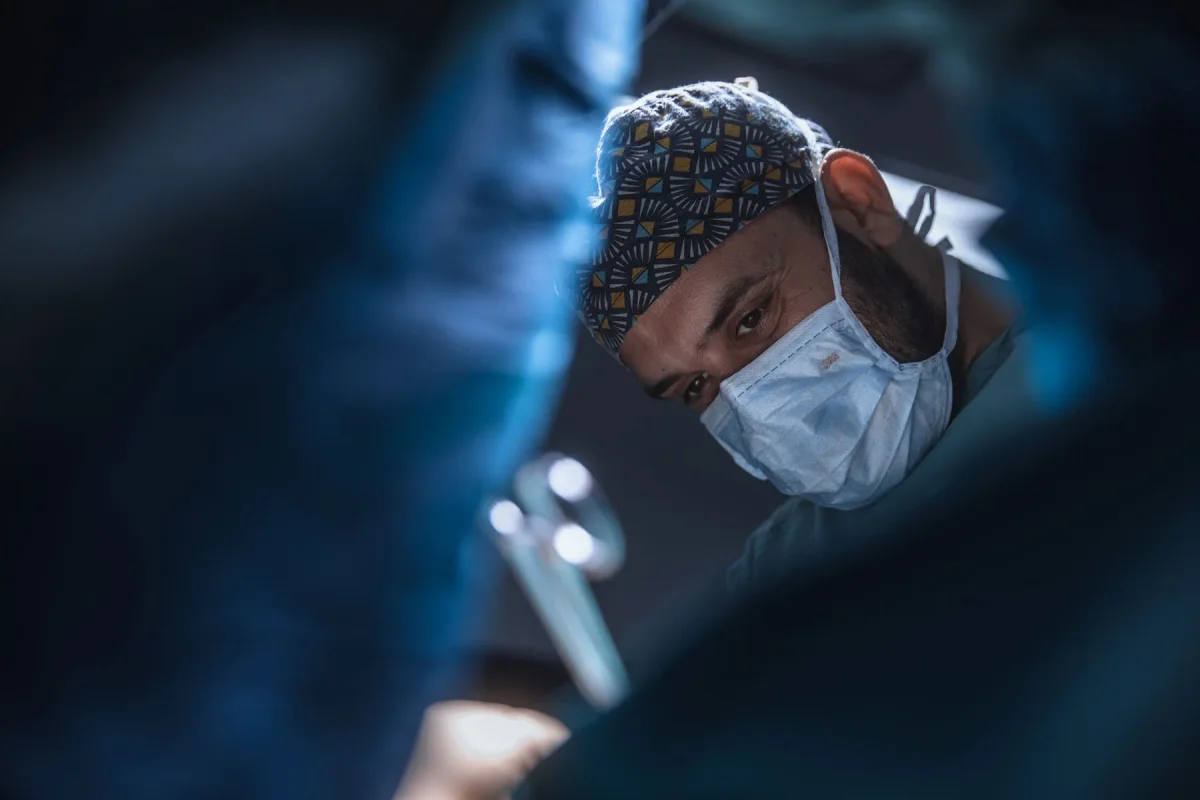
For operable disease, removal of the affected part of the oesophagus and lymph nodes (oesophagectomy), followed by reconstruction, is a cornerstone of treatment. This is major surgery requiring a specialist team and a well-organised perioperative care setting.
Preoperative (neoadjuvant) treatment
In most locally advanced cases, a combination of chemotherapy and radiotherapy precedes surgery, aiming to shrink the tumour and improve the cancer outcome.
Systemic treatment and supportive care
Where the disease is not operable, the plan focuses on systemic treatment and maintaining swallowing and quality of life, for example through endoscopic interventions and nutritional support.
Nutritional support is part of the plan from the outset in every case — swallowing difficulties have often already affected the patient’s diet.
INFORMATION
What to expect at your first appointment
Step 1 — Reviewing your records: We assess your gastroscopy, biopsies and imaging, and arrange anything that is missing.
Step 2 — Understanding the diagnosis: We explain the type, location and stage of the disease in clear language.
Step 3 — The plan: We present the multidisciplinary team’s recommendation, the sequence of steps and the role of each treatment.
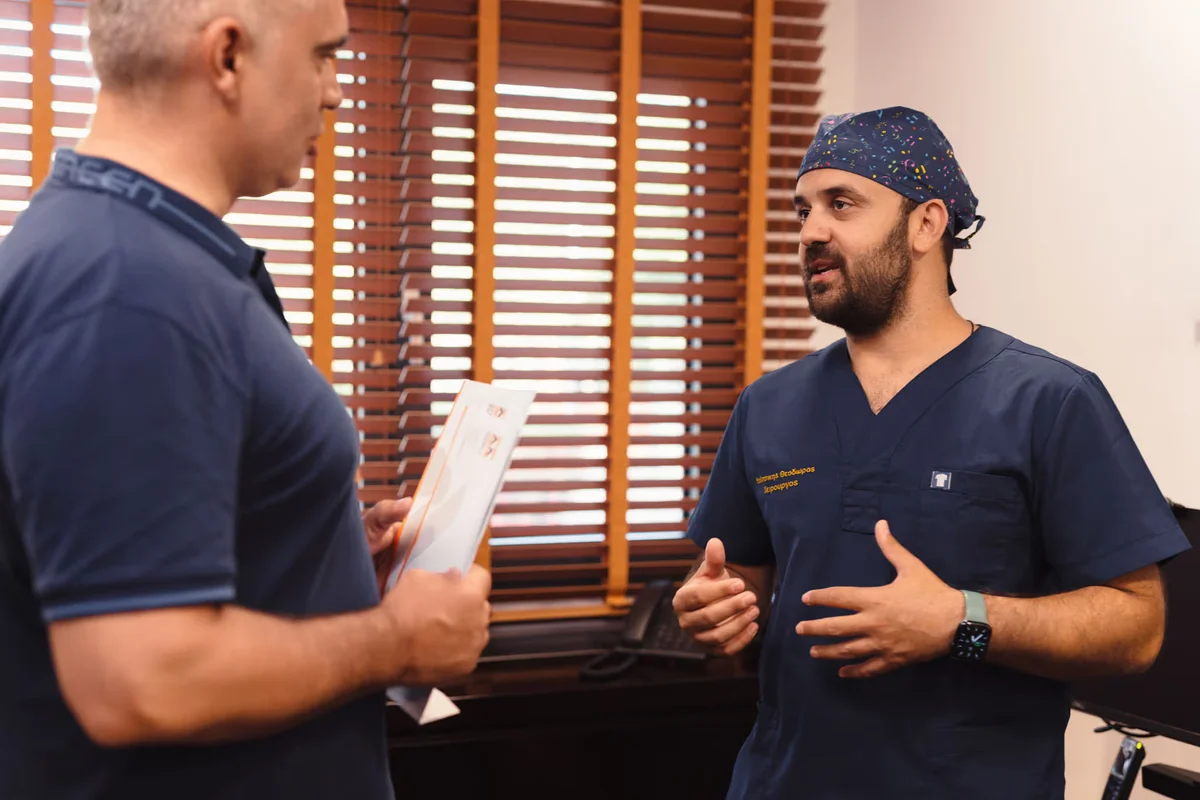
Step 4 — Time for questions: You and your loved ones have the time you need, together with a written outline of the next steps.