INFORMATION
About the condition
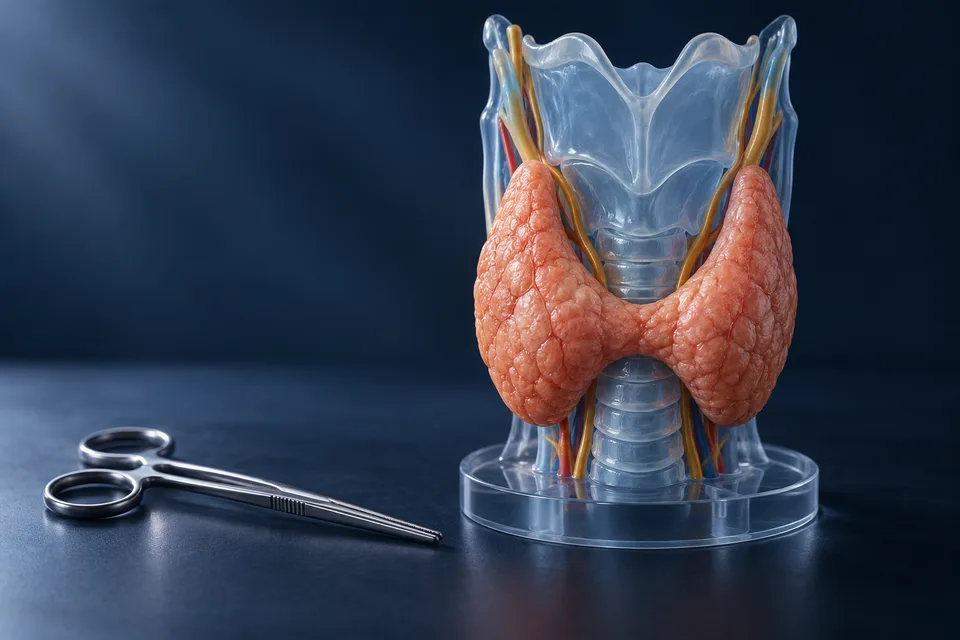
The thyroid acts as the body’s thermostat, regulating metabolism, energy and other vital functions. Conditions such as thyroid nodules, goitre or thyroid cancer may disrupt its function or cause local symptoms. Early diagnosis allows appropriate treatment planning, timely detection of any malignancy and protection of neighbouring organs.
INFORMATION
What are thyroid conditions?
The role of the gland
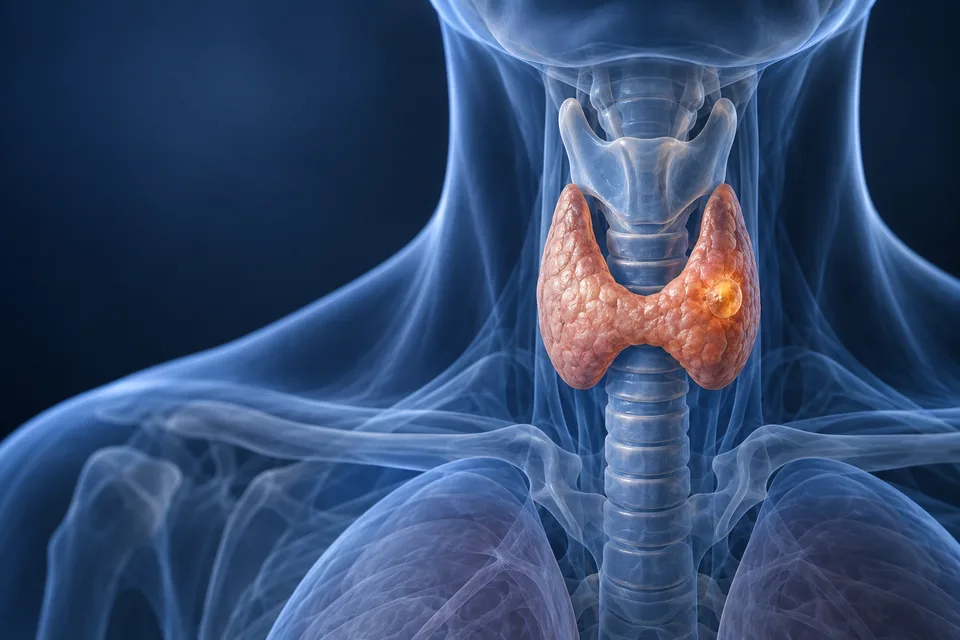
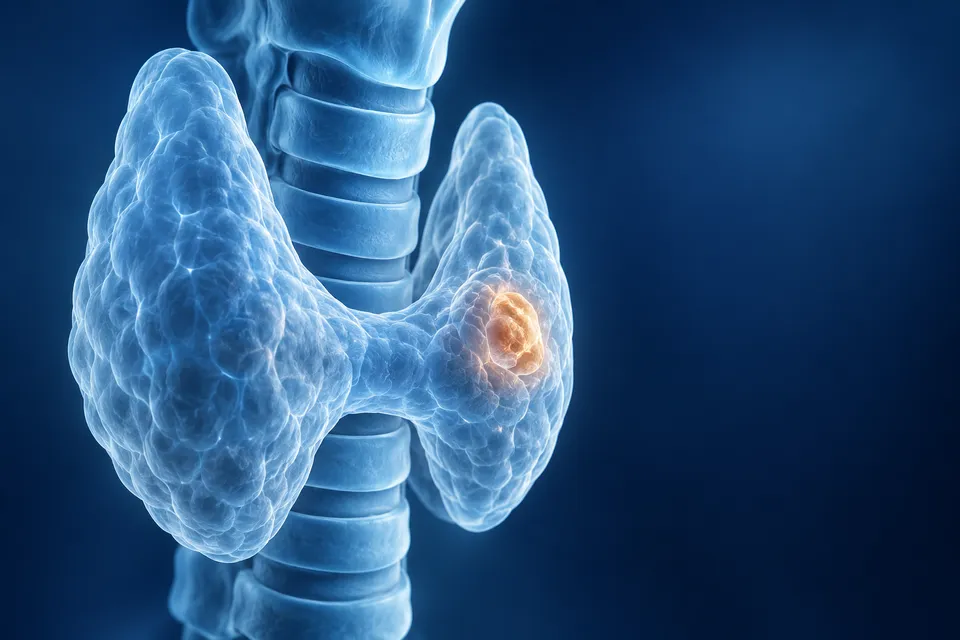
The thyroid lies at the front of the neck and produces hormones that regulate metabolism and the function of almost every organ.
The main ailments
Thyroid nodules — solid or fluid-filled areas within the gland. Most are benign, but some need further investigation.
Goitre — enlargement of the gland, which can cause pressure affecting swallowing or breathing.
Thyroid cancer — malignancy of the gland, which can be treated surgically after early diagnosis, with a good outlook in most forms.
ATTENTION TO THE SYMPTOMS
When should they be investigated? Points you should not ignore
Many thyroid conditions develop silently or with non-specific symptoms and are found incidentally during routine assessment or imaging for another reason.
Points that need medical evaluation:
Unexplained tiredness
Weight changes without an obvious cause
A feeling of swelling or a lump in the throat
A palpable nodule or visible neck swelling
Difficulty swallowing
Difficulty breathing or a feeling of pressure
Persistent hoarseness or a change in voice
A symptom does not necessarily indicate a serious condition, but it does mean appropriate investigation is needed.
Personalised CARE
The right treatment
starts with you.
Your investigations, history and needs guide the next step. Discuss the available options with your doctor.
Talk to the doctorINFORMATION
Who do they concern? / When is surgical evaluation needed?
Thyroid conditions are more common in women than men. Particular attention is needed for people with:
A family history of thyroid disease
A history of radiation exposure to the neck
When is surgical treatment necessary?
Not every thyroid condition requires an operation. Surgery is considered mainly when:
Fine-needle aspiration (FNA) findings are suspicious or positive for malignancy
A goitre or nodule causes pressure affecting swallowing or breathing
An overactive thyroid cannot be controlled with other treatment
A nodule grows significantly during follow-up
The final decision is individualised according to the findings, history and patient’s needs.
INFORMATION THAT MATTERS
Benefits of timely, appropriate treatment
Structured investigation and appropriate treatment planning can offer:
Early detection of any malignancy at a stage allowing more effective treatment
Distinguishing cases that need surgery from those suitable for monitoring
Protection of the voice and calcium regulation through careful surgical technique when an operation is needed
Avoiding unnecessary delays or unnecessary operations
THE PROCEDURE
How is the evaluation done? Step by step
Medical history — Symptoms, family history, previous investigations and treatments.
Clinical examination — Focused examination of the neck to assess the gland and any nodules.
Hormone tests — Blood tests for thyroid hormones, showing how the gland functions.
Ultrasound — Shows the gland’s structure and identifies and characterises any nodules.
Fine-needle aspiration (FNA), if needed — Collection of cells with minimal discomfort to assess the possibility of malignancy.
Treatment planning — Monitoring, medication or surgery according to the findings.
TREATMENT OPTIONS
Treatment options
Monitoring / conservative treatment
Many nodules and benign conditions do not require surgery. Regular follow-up includes clinical examination, hormone tests and ultrasound. Conservative management is recommended instead of surgery where appropriate.
Medication
Thyroid function disorders may be managed with medication, in collaboration with an endocrinologist where needed.
Surgical treatment (thyroidectomy)
Where indicated, all or part of the gland is removed at St Luke’s Hospital. The surgical team treats the full range of benign and malignant thyroid conditions. During surgery, nerve monitoring helps identify and protect the laryngeal nerves, reducing the risk of voice changes. Care is also taken to protect the parathyroid glands, which regulate calcium. A good cosmetic result is another aim, using a small, discreet incision.
INFORMATION
Thyroidectomy
When findings indicate surgery — a suspicious or confirmed malignant nodule, a large goitre causing pressure, or uncontrolled overactivity — the operation is thyroidectomy.
Total or partial?
Total thyroidectomy — removal of the whole gland; the usual choice for malignancy and disease affecting both sides.
Lobectomy (hemithyroidectomy) — removal of one lobe; sufficient in selected cases of a single benign or low-risk lesion.
The extent of surgery is decided individually according to FNA cytology, ultrasound features and the patient’s overall circumstances.
Safety: voice and calcium
The nerves controlling the vocal cords and the parathyroid glands, which regulate calcium, lie beside the thyroid. Protecting them is central to the surgical technique, through meticulous identification of structures and careful preservation of the parathyroids.
After the operation
The hospital stay is generally short.
After total thyroidectomy, a daily thyroxine tablet fully replaces the gland’s hormone function, with the dose adjusted together with the endocrinologist.
Histological examination of the removed tissue determines any further steps, always within multidisciplinary care.
INFORMATION
What to expect at your first appointment
Step 1 — Hormonal and clinical assessment: We listen carefully to your symptoms and review recent blood tests and previous ultrasound scans.
Step 2 — Focused examination: Examination of the neck to assess the gland or nodules, and discussion of any FNA results.
Step 3 — Treatment plan: If surgery is necessary, we explain the procedure step by step, its benefits and possible risks, and the next steps in preoperative assessment.
Useful to have with you
Recent thyroid hormone tests
Previous ultrasound scans, including older scans for comparison
FNA result, if performed
List of medications and supplements
List of allergies
Reports from other doctors
History of hospital admissions or operations
THE PROCEDURE
Diagnosis and preparation
The diagnostic assessment answers four key questions:
Is the gland functioning normally?
Are there nodules, and what are their characteristics?
Is there evidence or suspicion of malignancy?
Is surgery needed, or is monitoring sufficient?
Preparing for assessment: Arrange previous investigations chronologically so that changes over time can be compared, particularly on ultrasound.
If an operation is planned, the pre-operative check-up includes blood tests, cardiac/pre-anaesthetic check-up and information about any drug discontinuation (eg anticoagulants) as directed.
INFORMATION
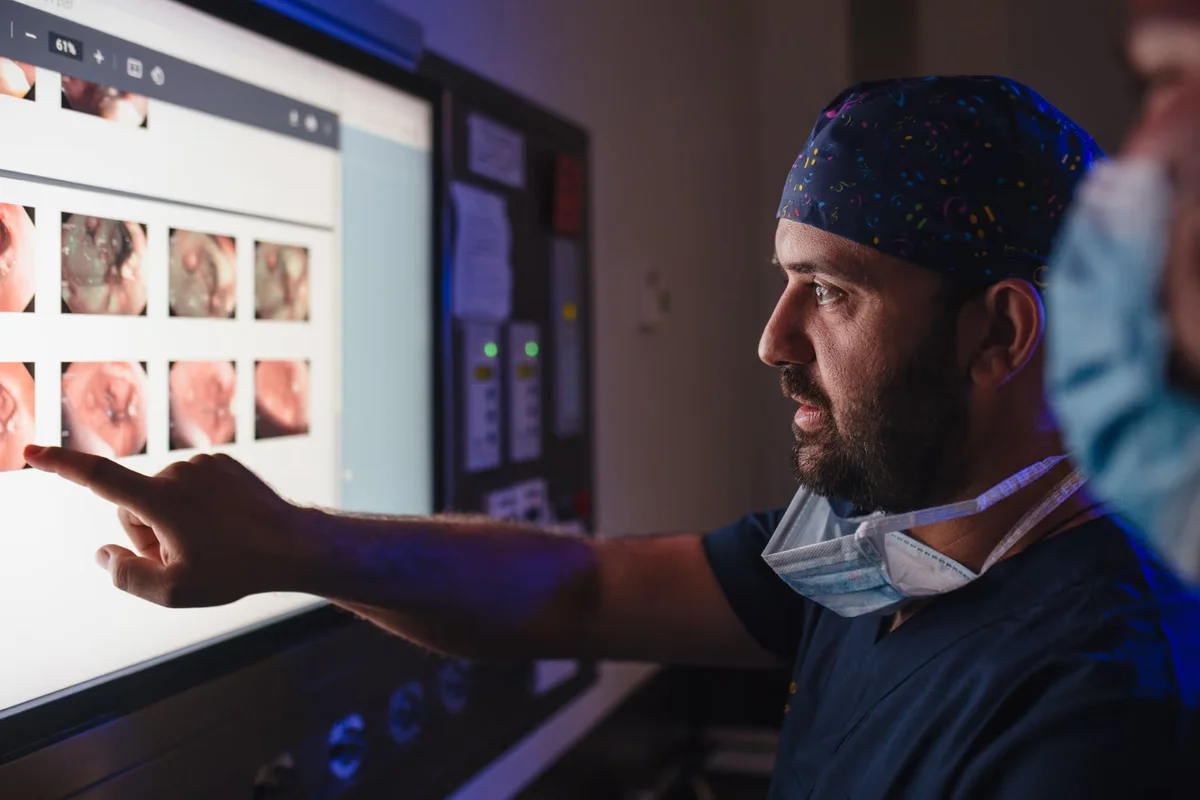
The doctor and his team
Dr Theodoros Kaltsikis is a general surgeon in Thessaloniki specialising in minimally invasive laparoscopic and robotic surgery. He operates at St Luke’s Hospital. Thyroid surgery requires precision in protecting the laryngeal nerves and parathyroid glands. The team’s experience helps maintain low rates of parathyroid injury, so that the great majority of patients do not require permanent calcium supplementation. Depending on the case, care may also involve: An endocrinologist A cytologist or histopathologist to assess FNA samples An oncologist for malignant conditions, as part of the multidisciplinary team