INFORMATION
About the condition
Modern cancer surgery with robotic precision
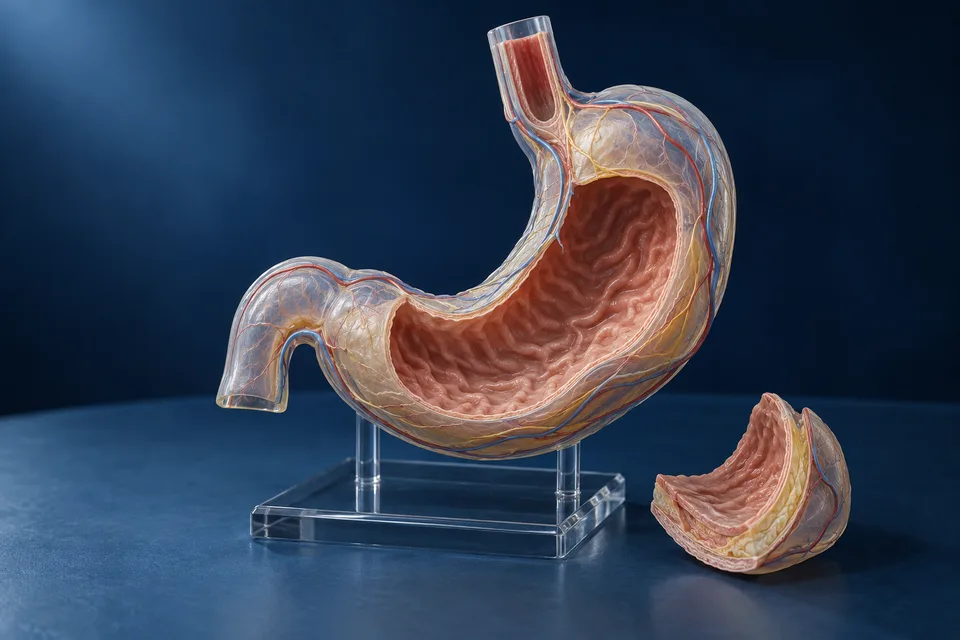
Stomach conditions, particularly gastric cancer, require prompt specialist medical attention. Early symptoms are often mild or misleading and should never be underestimated. Early diagnosis, combined with targeted treatment, significantly improves the outlook, increases the chances of a complete cure and protects the patient’s quality of life.
INFORMATION
What are stomach conditions?
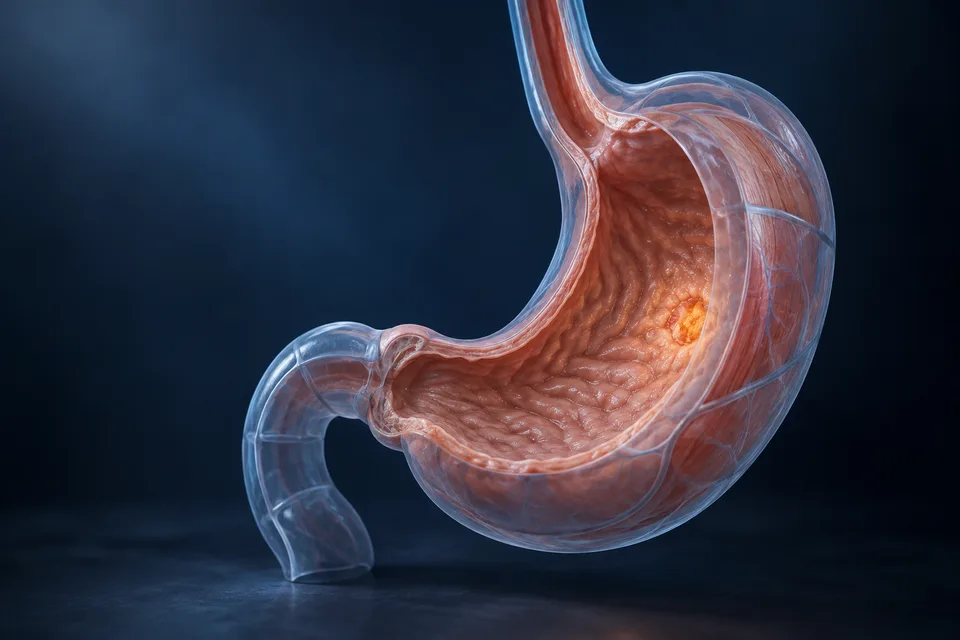
Stomach cancer (gastric cancer)
A malignant disease of the stomach, often with mild or misleading early symptoms. The outlook depends mainly on the stage at diagnosis — making timely investigation of persistent symptoms particularly important.
Other conditions that may need surgical assessment
Gastrointestinal stromal tumours (GISTs) — tumours of the digestive tract wall with a distinct biological behaviour.
Stomach polyps — usually benign, although some require removal or monitoring.
Complicated stomach ulcers — when an ulcer bleeds, perforates or fails to heal.
Treatment depends on the nature and extent of each condition and is assessed individually.
Mild symptoms do not necessarily mean a harmless condition — persistent indigestion needs investigation, not indefinite self-treatment.
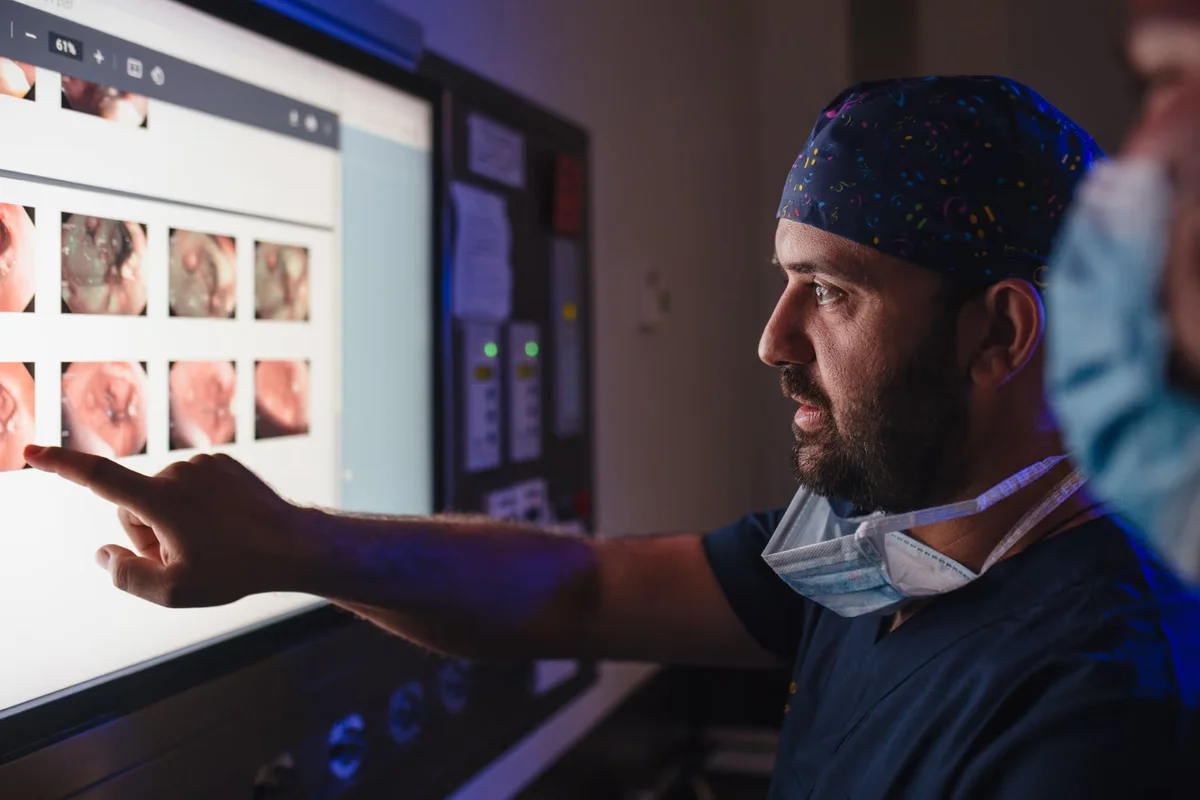
Full staging before a decision — gastroscopy, biopsy and CT.
A team approach — multidisciplinary cancer review, chemotherapy where needed and nutritional support.
INFORMATION
Benign stomach conditions — a brief overview
Not every stomach condition is malignant — far from it. The most common benign conditions are:
Stomach ulcer — a sore in the lining, usually caused by Helicobacter pylori or anti-inflammatory medicines. It is generally treated with medication by a gastroenterologist. Surgery is reserved for complications: perforation, bleeding that cannot be controlled endoscopically or narrowing. These are emergencies, treated laparoscopically where feasible.
Stomach polyps — usually benign findings at gastroscopy; most are removed endoscopically. Certain types require monitoring or, less commonly, surgical assessment.
Gastrointestinal stromal tumours (GISTs) — less common tumours of the stomach wall with intermediate biological behaviour: they are neither conventional cancers nor entirely benign. Treatment is generally surgical, often laparoscopic wedge resection, with an individualised plan.
The practical message: persistent stomach symptoms need gastroscopy — this distinguishes benign from malignant disease, rather than symptoms alone.

Personalised CARE
The right treatment
starts with you.
Your investigations, history and needs guide the next step. Discuss the available options with your doctor.
Talk to the doctorATTENTION TO THE SYMPTOMS
When should they be investigated? Points you should not ignore
The most common early signs of stomach conditions resemble ordinary benign symptoms, which is why they are often ignored or masked with antacids for a long time.
Signs that need medical assessment when persistent:
Persistent indigestion
Feeling full early, after only a small amount of food
Upper abdominal pain
Unexplained weight loss
INFORMATION
Who do they concern? / When is surgical evaluation needed?
Stomach conditions are more common in:
People over 60
People with a history of Helicobacter pylori infection
Smokers
People whose diet is high in salted or smoked foods
When is surgery considered?
Surgical assessment is needed when gastroscopy and biopsy confirm malignancy, when a GIST or polyp requires removal, or for a complicated ulcer. The type and extent of surgery are determined by staging and multidisciplinary cancer review — not by a single test.

INFORMATION THAT MATTERS
Benefits of timely, coordinated treatment
Early diagnosis significantly improves the outlook and the chances of a complete cure
A plan developed by a multidisciplinary cancer team ensures that all options are considered, including chemotherapy, surgery and their sequence
Minimally invasive techniques, laparoscopic or robotic, aim for complete cancer removal with the least possible impact on the patient
Support continues beyond surgery: nutritional guidance and structured postoperative follow-up
THE PROCEDURE
How is the evaluation done? Step by step
Medical history — Symptoms, duration, weight loss, family history and risk factors.
Gastroscopy with biopsy — The main diagnostic investigation: it confirms or excludes malignancy.
CT scan — Full staging of the disease: extent, lymph nodes and distant spread.
Multidisciplinary cancer meeting — The team, including the surgeon, oncologist and gastroenterologist, determines the individual treatment plan and sequence of steps.
Treatment — Preoperative chemotherapy where needed, surgical removal and postoperative follow-up.
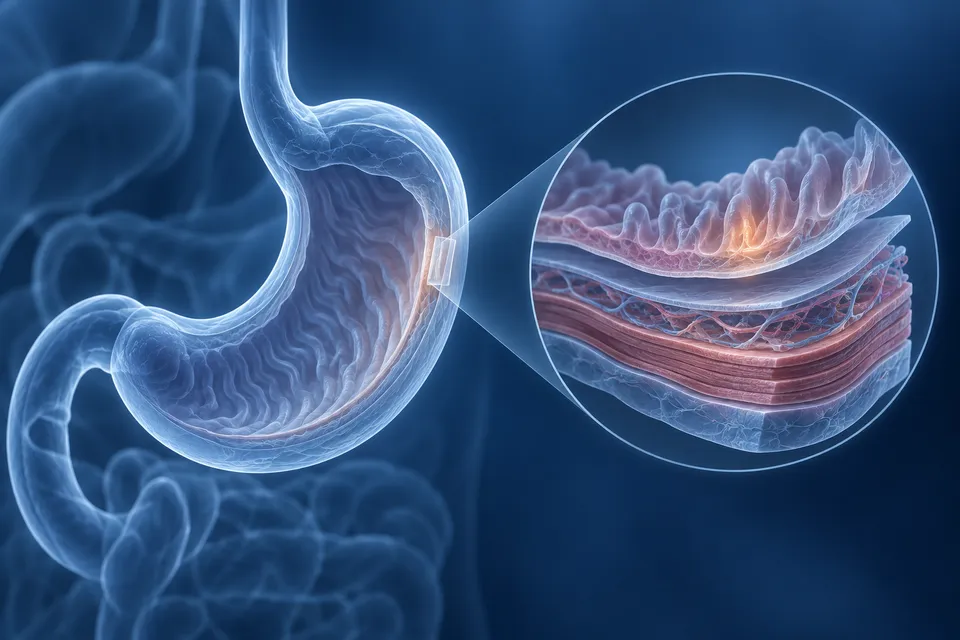
TREATMENT OPTIONS
Treatment options
Preoperative chemotherapy
In most cases, patients with stomach cancer need preoperative chemotherapy to shrink the tumour and reduce lymph node involvement. An experienced oncology team supports the patient throughout chemotherapy.
Surgical removal — laparoscopic or robotic
Malignant stomach conditions are treated laparoscopically or robotically, aiming for complete cancer removal with the least possible impact on the patient. Depending on the location and extent of disease, the operation may be a subtotal or total gastrectomy. The choice is individualised, based on staging findings. Gastrectomy.
Managing complications without a second operation, where feasible
The team includes specialist gastroenterologists who can often manage a complication without another surgical operation.
Nutritional support
After surgery for a stomach tumour, patients need nutritional support. The team also provides this aspect of care, with experienced dietitians.
Other conditions (GISTs, polyps, complicated ulcers)
Treatment is tailored to the nature and extent of the condition, ranging from endoscopic or surgical removal to monitoring.
INFORMATION
What to expect at your first appointment
Step 1 — Detailed discussion and history: With care and respect, we assess your symptoms, such as weight loss or indigestion, and take your full medical and family history.
Step 2 — Cancer assessment: We carefully review the gastroscopy, biopsies and CT scan to establish the stage accurately.
Step 3 — Planning treatment: We explain the strategy, including the sequence of chemotherapy and surgery where needed, the type of operation and what to expect during recovery.
Useful to have with you
Gastroscopy report and biopsy results
CT scan images on CD/DVD or via a link, together with the report
Recent blood tests
List of medications and supplements
List of allergies
Reports from other doctors, such as a gastroenterologist or oncologist
History of hospital admissions or operations
You may bring someone close to you to the appointment — in cancer care, a companion can help with understanding information and making decisions.
THE PROCEDURE
Diagnosis and preparation
The diagnostic test (see steps in section 7) answers four basic questions:
Is there a malignancy? (Gastroscopy and biopsy)
What is the stage of the disease? (CT scan)
What is the appropriate treatment sequence — chemotherapy or surgery first?
Which operation is needed: subtotal or total gastrectomy?
Preparing for assessment: Gather all your investigations in chronological order, including the imaging files themselves, not only the reports.
If surgery is planned, preoperative assessment includes blood tests, cardiac and anaesthetic assessment, nutritional assessment and advice on whether any medicines, such as anticoagulants, need to be stopped under medical guidance.