INFORMATION
About the condition
Gallbladder conditions — stones (cholelithiasis), polyps and inflammation (cholecystitis) — can cause anything from simple indigestion and discomfort after eating, to severe colic and serious complications such as pancreatitis. Because the problem often worsens with time, early surgical evaluation and, where indicated, cholecystectomy are usually the recommended treatment.
INFORMATION
What are gallbladder conditions?
The role of the gallbladder
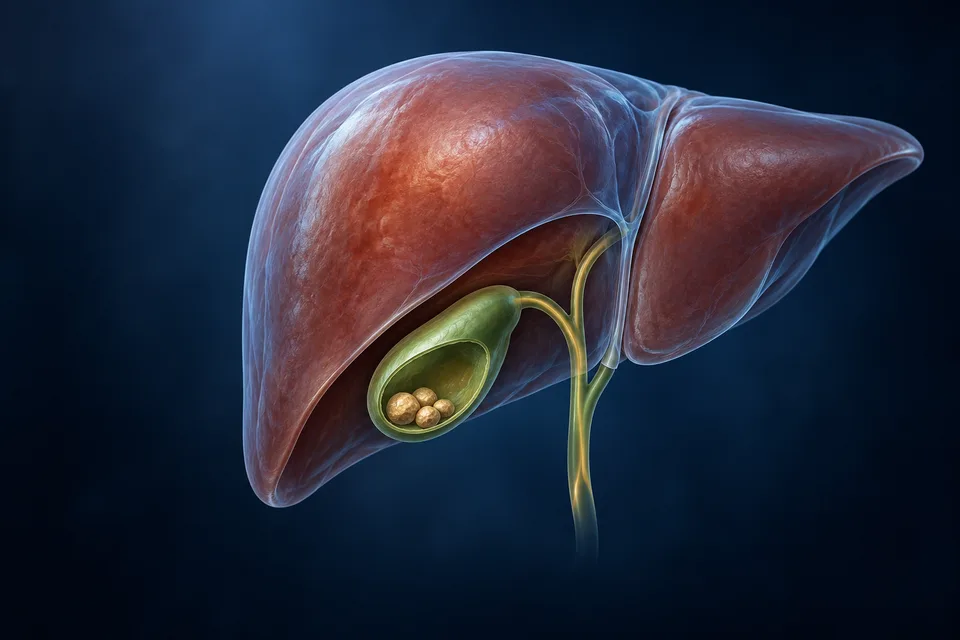
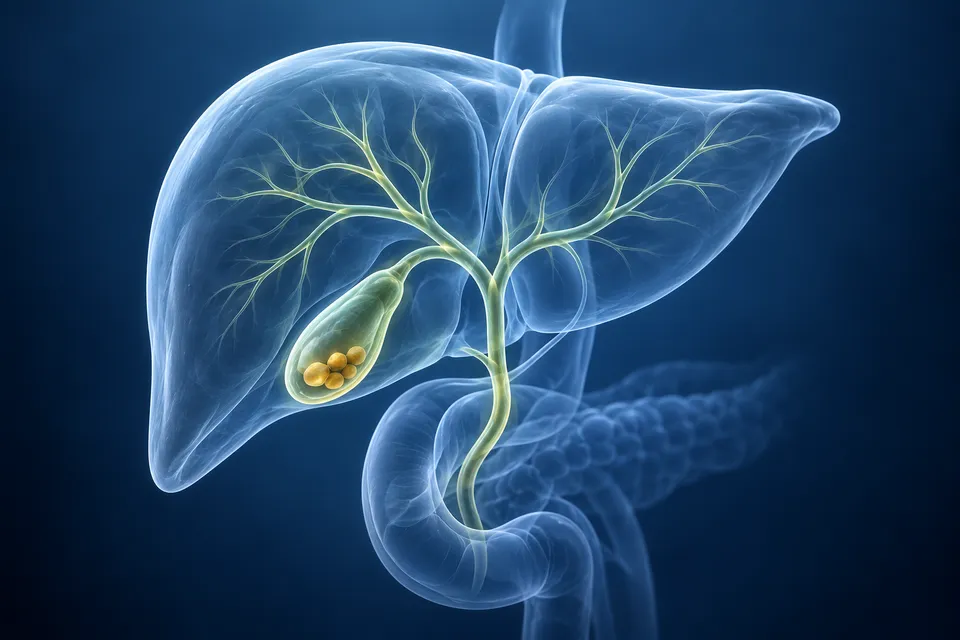
The gallbladder stores the bile produced by the liver and channels it to the intestine for fat digestion. When the composition of bile is disturbed, gallstones or sludge are formed.
The main ailments
Cholelithiasis (gallstones) — the most common condition; may be asymptomatic or cause colic and complications.
Cholecystitis — inflammation of the gallbladder, usually from an impacted stone.
Gallbladder polyps — usually benign; some need monitoring or removal, depending on size.
Bile duct stones (choledocholithiasis) — a stone that moves from the gallbladder into the bile duct can cause jaundice or pancreatitis, a serious complication we aim to prevent.
ATTENTION TO THE SYMPTOMS
When should they be investigated? Points you should not ignore
Points that need medical evaluation:
Discomfort or "heaviness" after eating, especially after fatty meals
Recurrent indigestion with no other explanation
Biliary colic: severe pain in the right upper abdomen, often after a meal
Incidental finding of stones or polyps on ultrasound
Persistent severe pain, fever, and jaundice (yellowing of the skin and eyes) indicate a problem — possible inflammation or passage of a stone in the bile duct — and prompt medical evaluation.
Personalised CARE
The right treatment
starts with you.
Your investigations, history and needs guide the next step. Discuss the available options with your doctor.
Talk to the doctorINFORMATION
Who do they concern? / When is surgical evaluation needed?
Gallbladder conditions are more common in:
Women
People over 40 years old
People with increased body weight
People with sudden weight fluctuations
High fat diet
When is surgical treatment necessary?
Surgical treatment is usually recommended when stones cause symptoms (colic, inflammation) or complications, as well as in selected asymptomatic cases with specific risk factors. The final decision is based on each patient's history, findings and needs.
INFORMATION THAT MATTERS
Advantages of early treatment
Prevention of complications — mainly pancreatitis and acute cholecystitis — before emergency treatment is needed
Planned, minimally invasive surgery instead of surgery in the area of inflammation, which is technically more difficult
Short hospitalisation — usually less than 24 hours — and quick return to everyday life
Post-operative pain usually minimal to zero, with return to activities in approximately 5 days, as appropriate
THE PROCEDURE
How is the evaluation done? Step by step
History taking — Record frequency and intensity of pain after meals, episodes (colic) and feeding.
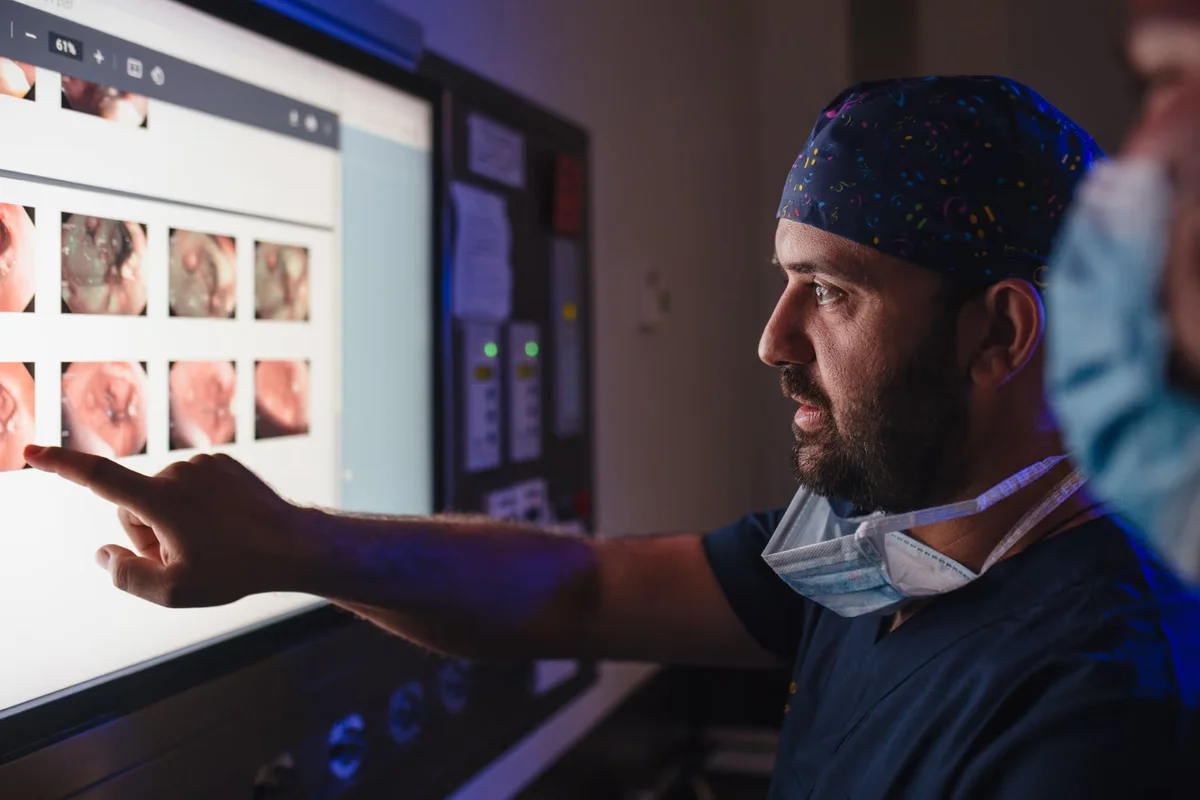
Ultrasound of the upper abdomen — The method of choice: very accurately detects stones and any inflammation of the gallbladder.
Liver function blood tests — Check for abnormalities that may suggest bile duct stones.
Additional testing, where necessary — If bile duct stones are suspected, the investigation is completed in collaboration with the gastroenterology team.
Treatment planning — Monitoring or surgical management, individualised.
TREATMENT OPTIONS
Treatment options
Monitoring
In selected asymptomatic cases (eg incidental stones found without symptoms, small polyps), observation may be recommended instead of immediate surgery, with individualised evaluation.
Laparoscopic cholecystectomy
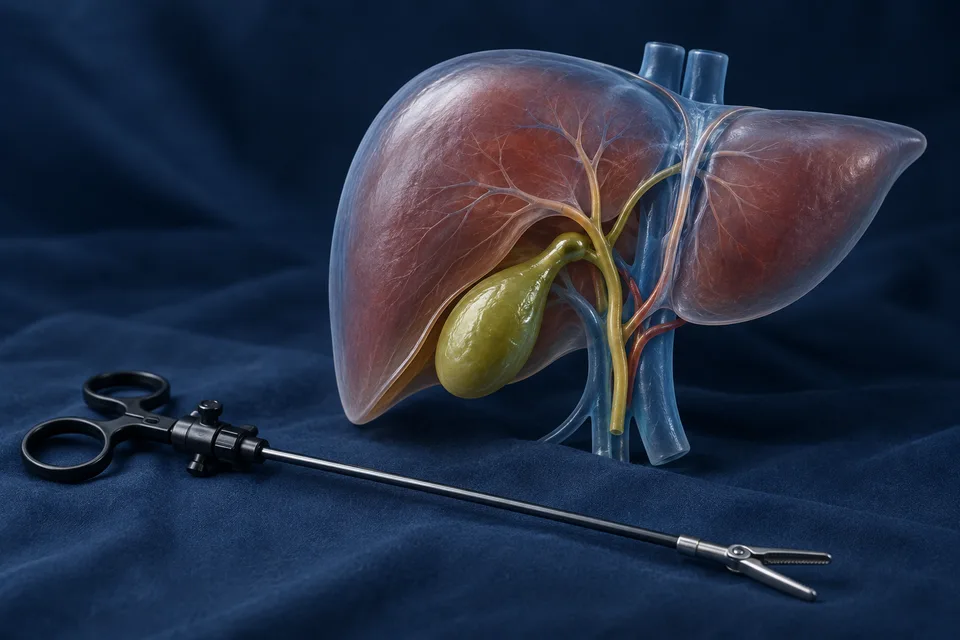
In the vast majority of cases, biliary diseases are treated laparoscopically, with small holes of a few millimetres. Although cholecystectomy is considered a common operation, when there is extensive inflammation or large stones, the operation is no longer simple — that's why the team's experience matters. The team also takes on cases with previous complications. Laparoscopic cholecystectomy.
Robotic surgery in complex cases
In cases of intense inflammation, where the surgeon needs to separate tissues and organs that have adhesions with the gallbladder, the operation can also be performed robotically, as the robotic system offers greater precision in the manipulations.
Bile duct stones — combined treatment in one operating session
When a stone has moved into the bile duct and causes jaundice or threatens pancreatitis, the patient is treated not only by the surgical team, but also by the gastroenterology team, which is specialised in liver, biliary and pancreatic diseases. The bile duct — that is, the cause of the jaundice and pancreatitis — is cleaned, and at the same time, in the same operating room and under general anaesthesia, the cholecystectomy is also performed. Thus, in most cases the patient returns home the next day.
INFORMATION
Laparoscopic Cholecystectomy
The definitive treatment for symptomatic gallstones and their complications is cholecystectomy: removal of the gallbladder together with its stones. Removing only the stones would leave the gallbladder able to form new ones.
How is it performed?
The operation is performed laparoscopically, through small holes of a few millimetres: with a high-definition camera, the gallbladder is safely detached and removed. Robotic assistance may be used in selected cases. The laparoscopic approach is now the norm and is associated with milder post-operative pain, short hospital stay and quick return to everyday life.
When an open approach might be needed
Less often — e.g. in severe inflammation, previous surgeries or anatomical difficulties — the operation can be converted or planned open. Safety always comes before method.
Life without a gallbladder
The gallbladder stores bile — it does not produce it. After its removal, bile continues to be produced by the liver and reaches the intestine; the vast majority of patients return to a completely normal diet, usually gradually over the first few weeks.
INFORMATION
What to expect at your first appointment
Step 1 — History of episodes (colic): We listen carefully to your complaints and record the frequency and intensity of pain after meals, as well as your diet.
Step 2 — Evaluation tests: We evaluate the upper abdominal ultrasound and liver blood tests to assess the size of the stones and the condition of the gallbladder.
Step 3 — Treatment Planning: If surgery is indicated, we walk you through the process, including the benefits and potential risks.
Useful to have with you
Upper abdominal ultrasound (recent and earlier, for comparison)
Recent blood tests (liver test)
History of episodes: when, after what, how long they lasted
List of medications and supplements
List of allergies
Opinions from other doctors / history of hospitalisations
THE PROCEDURE
Diagnosis and preparation
The diagnostic test (see steps in section 7) answers four basic questions:
Are there stones, sludge, polyp or inflammation in the gallbladder?
Are the symptoms really due to the gallbladder or another condition (eg stomach)?
Is there evidence or suspicion of bile duct stones?
Is surgery needed now, or is monitoring sufficient?
If an operation is planned, the pre-operative check-up includes blood tests, cardiac/pre-anaesthetic check-up and information about any drug discontinuation (eg anticoagulants) as directed.