INFORMATION
About the condition
Colorectal cancer is one of the most common cancers — and also one of the most treatable when diagnosed early. Because it often causes no signs in its early stages, screening and prompt investigation of any suspicious findings make a significant difference. When surgery is needed, treatment can now be minimally invasive — laparoscopic or robotic — within a plan developed individually for each patient by a multidisciplinary cancer team.
INFORMATION
What is colorectal cancer?
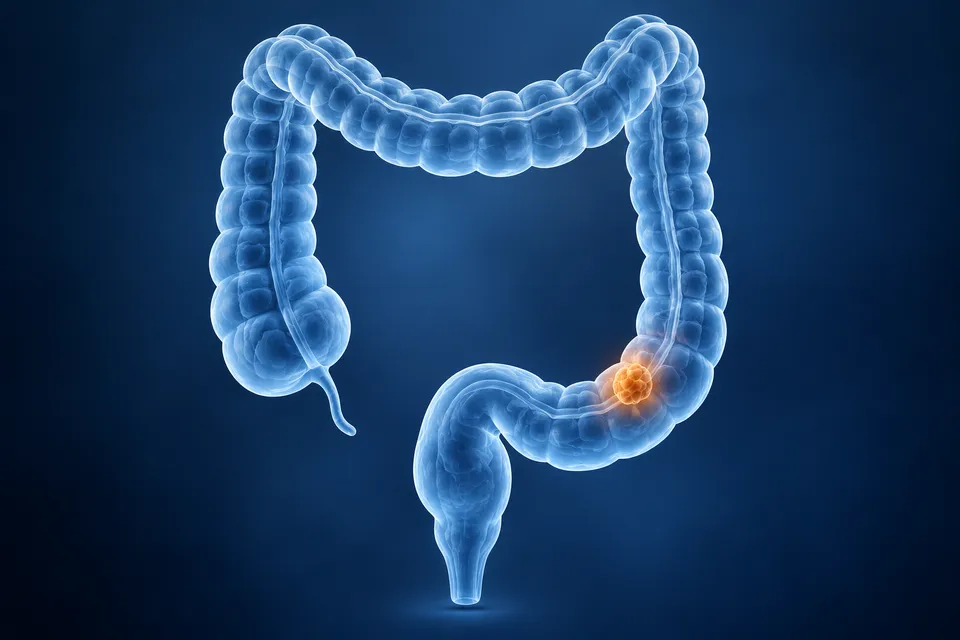
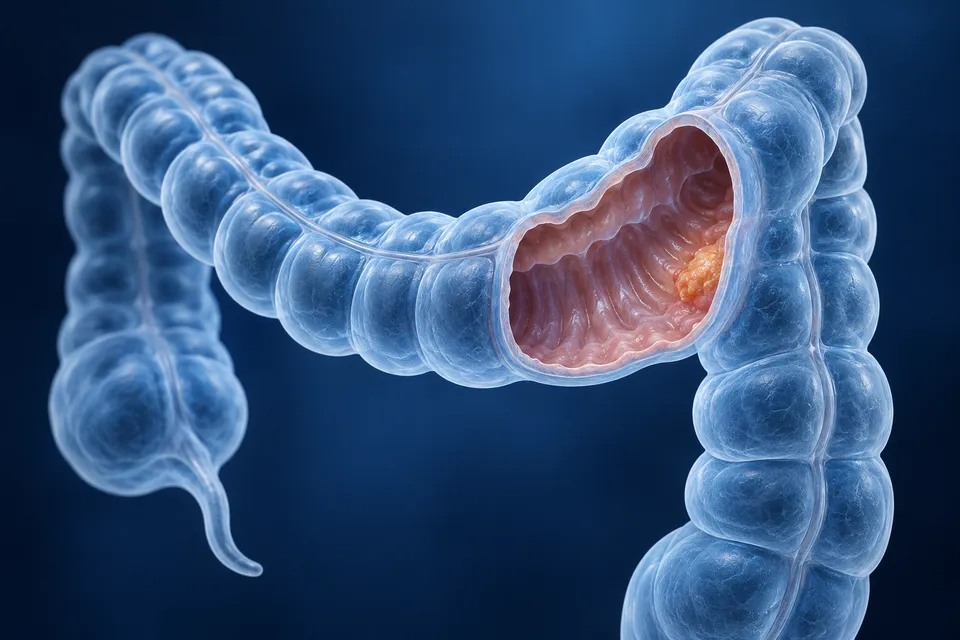
Cancer of the colon and rectum develops when cells in the bowel lining begin to multiply uncontrollably. It rarely appears from nowhere: in the great majority of cases, it starts as a benign polyp that takes years to become malignant.
This slow progression provides an important opportunity for prevention: screening colonoscopy allows polyps to be identified and removed before they can develop into cancer. Even when cancer has already developed, early diagnosis means more treatment options and a substantially better outlook.
It often starts as a polyp — which is why screening colonoscopy saves lives.
Early diagnosis matters — more options, a better outlook.
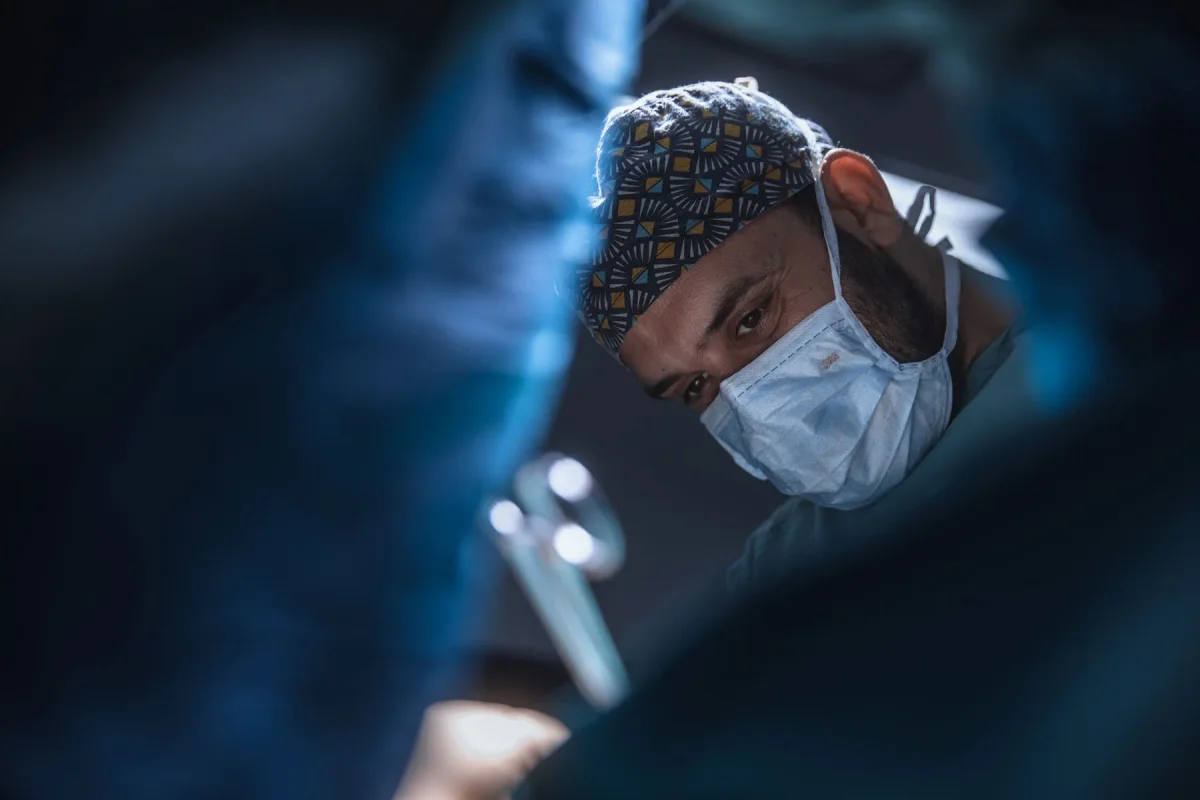
Without large incisions — laparoscopic or robotic colectomy through small openings.
ATTENTION TO THE SYMPTOMS
Symptoms — when investigations are needed
In its early stages, the disease is often silent. When signs appear, the most common include:
Blood in the stool or dark stools
A persistent change in bowel habits, such as diarrhoea, constipation or a change in stool shape, lasting more than a few weeks
A feeling of incomplete emptying
Persistent abdominal pain or bloating
Unexplained weight loss
Anaemia or unexplained tiredness
None of these necessarily means cancer — most have benign causes. However, because the cause cannot be established without assessment, they need investigation without delay, with colonoscopy as the first step.
Personalised CARE
The right treatment
starts with you.
Your investigations, history and needs guide the next step. Discuss the available options with your doctor.
Talk to the doctorINFORMATION
Who is affected — risk factors
Age — incidence increases after 50; regular screening is recommended from the age of 45.
Bowel polyps — a history of polyps or previous polyp removal.
Family history — bowel cancer or polyps in first-degree relatives; more rarely, hereditary syndromes.
Inflammatory bowel disease — long-standing ulcerative colitis or Crohn’s disease.
Lifestyle — smoking, excess body weight, inactivity and a diet low in fibre.
THE PROCEDURE
How is the diagnosis made? Step by step
Medical history and clinical examination — Symptoms, family history and risk factors.
Colonoscopy — The key investigation: it allows direct examination of the bowel, biopsies and removal of polyps during the same procedure.
Histological examination — Confirms the diagnosis and tumour type.
Staging — CT, and MRI for rectal cancer, to assess the extent of disease; laboratory tests including tumour markers.
Multidisciplinary cancer meeting — The treatment plan is developed jointly by the surgeon, oncologist and, where needed, radiation oncologist, and tailored to the individual.
INFORMATION
Surgical treatment — colectomy
Surgical removal is the cornerstone of treatment at most stages. During colectomy, the section of bowel containing the tumour is removed together with the associated lymph nodes, and the bowel is reconnected.
Laparoscopic and robotic colectomy
In suitable cases, the operation is minimally invasive — through small openings a few millimetres wide, using a high-definition camera and, where indicated, robotic assistance with the da Vinci system. This approach is generally associated with:
less postoperative pain,
earlier mobilisation and return of bowel function,
a shorter hospital stay,
a better cosmetic result.
With appropriate patient selection, the completeness of cancer removal is comparable to that achieved with open surgery.
Enhanced recovery protocols (Fast Track / ERAS)
Perioperative care follows modern enhanced recovery protocols: early mobilisation and eating, targeted pain relief and minimising tubes and catheters — aiming for a safer, faster return to everyday life.
When might open surgery or a stoma be needed?
In selected cases, such as very extensive disease, emergency obstruction or previous surgery, an open approach may be preferred. Less commonly, a temporary or permanent stoma may be needed. These possibilities are discussed thoroughly with the patient before surgery, so there are no surprises.
TREATMENT OPTIONS
The treatment pathway — what it involves overall
Depending on the stage and characteristics of the tumour, the plan may include:
Surgery alone — in early stages, removal may be sufficient treatment.
Surgery plus chemotherapy — additional treatment after the operation, when recommended by the multidisciplinary cancer team.
Preoperative treatment — for rectal cancer, radiotherapy/chemotherapy often precedes surgery to shrink the tumour.
Follow-up after treatment, including clinical review, markers, imaging and colonoscopies, is scheduled systematically — your relationship with the team does not end with surgery.
INFORMATION
What to expect at your first appointment
Step 1 — Reviewing your records: Together, we review your colonoscopy, biopsy and imaging. If an investigation is missing, we arrange it.
Step 2 — Understanding the diagnosis: We explain the findings and stage of the disease in clear language.
Step 3 — Treatment plan: We present the multidisciplinary team’s recommendation, the surgical options and the sequence of steps.
Step 4 — Time for questions: You and your loved ones have time to ask about anything that concerns you, together with a written outline of the next steps.